Non-Diplomacy and its Consequences. Part One.
In September I gave the second of two lectures at Te Herenga Waka Victoria University in Wellington. This and the following article are based on the second lecture, given to Ethics and International Relations students. Thanks to Senior Lecturer Ramon Das for the invitation.
The topic – Non-Diplomacy and its Consequences – should be of interest to anyone who is appalled at the steadily rising tensions between the major powers, the proliferation of wars of aggression, and other serious violations of both human rights and the UN Charter.
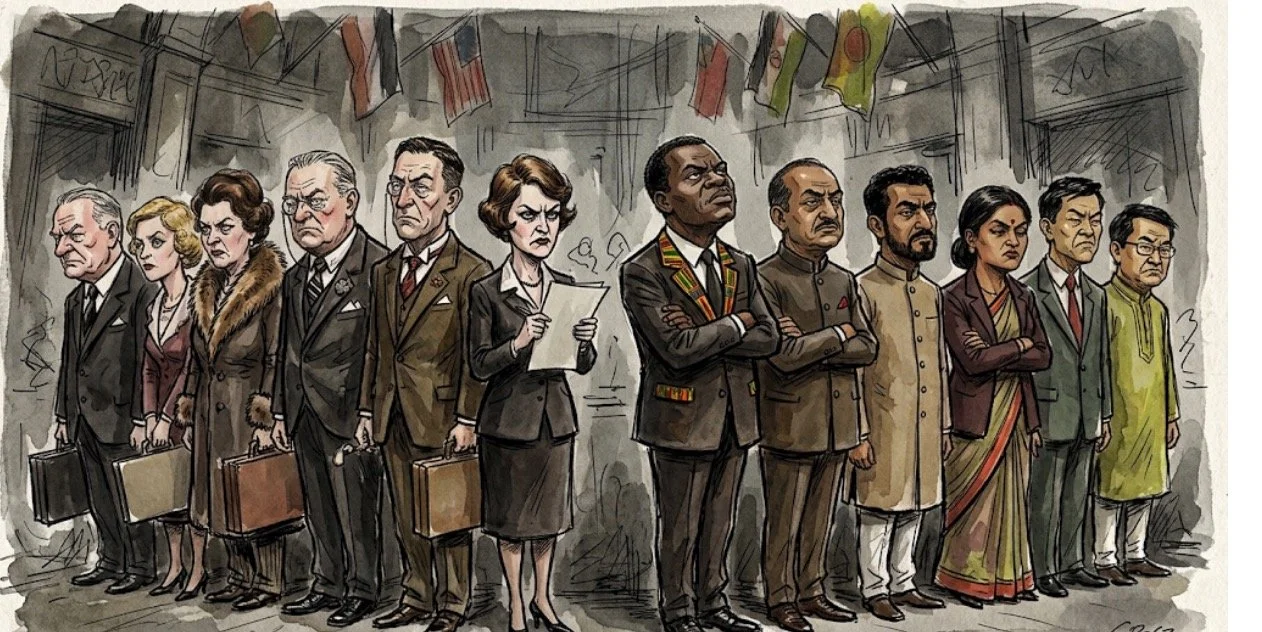
I am in the midst of doing a series of interviews with Ambassadors – particularly those whose perspectives are generally dismissed or diminished. I have recently published interviews with Stanislav Krans, the Russian Federation Ambassador; Dr Reza Nazar Ahari, the Iranian Ambassador; Luis Ernesto Morejon Rodriguez, the Cuban Ambassador and Ahmed AbdeLatif the Chargé d’Affaires of Sudan. My latest article I think represents a milestone: I appear to be the first Australasian journalist to have interviewed the Secretary-General of the SCO (Shanghai Cooperation Organisation), Nurlan Yermekbayev who I met on a recent visit to China.
All the ambassadors provided important diplomatic and geopolitical insights – the kind we seldom get in our mainstream media.
Diplomacy and finding ways to co-exist
Diplomacy – also called statecraft – traditionally means the art of conducting negotiations and managing relationships between nations.
Some of the seeds and fruit of diplomacy are the various important international treaties, for example, around the rights of minority groups within states or major agreements like the 1948 Genocide Convention.
But it still comes down to the day-to-day work of diplomats and leaders to help keep peace and avoid war.
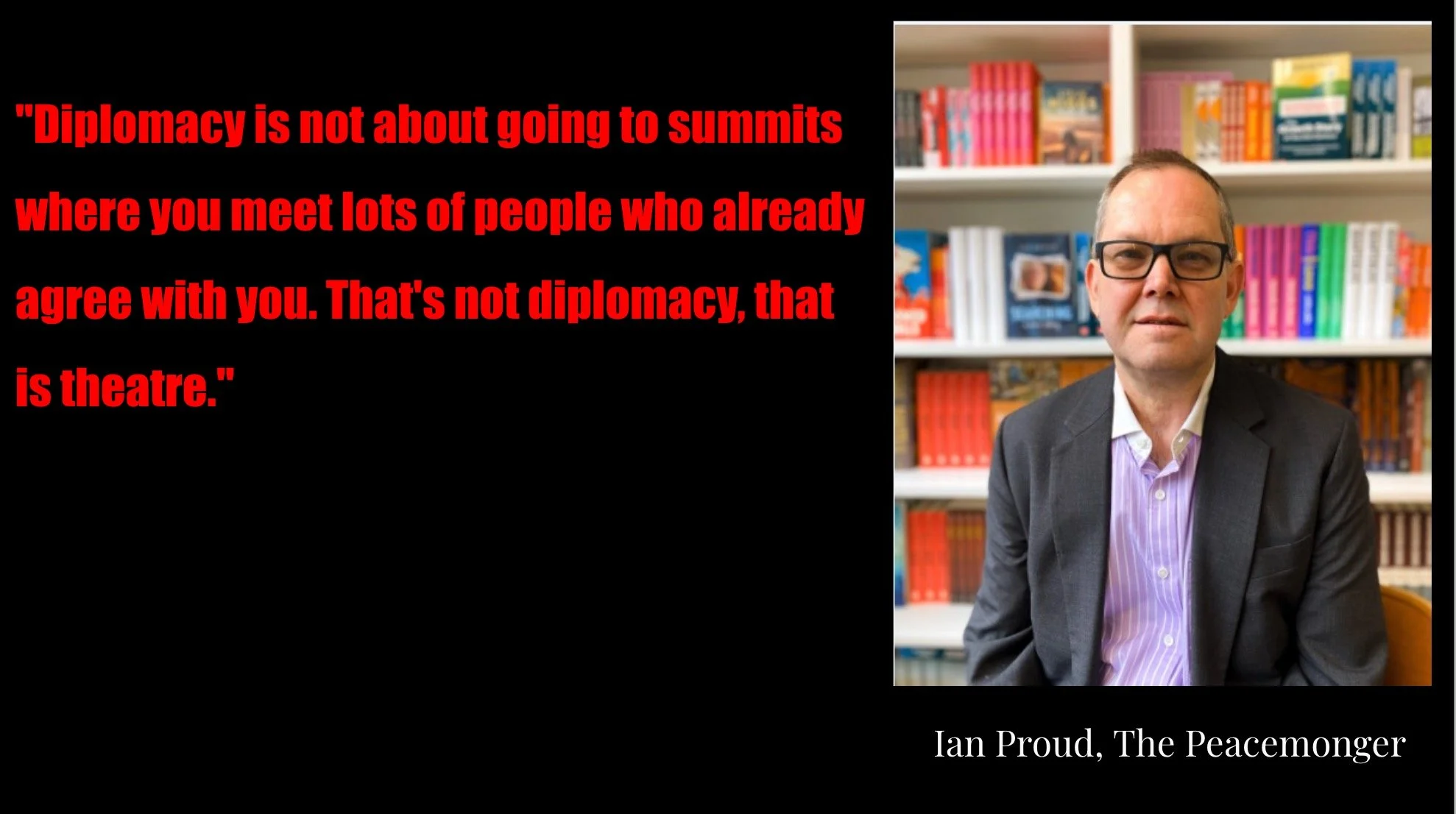
Ian Proud, who interviewed me recently for his podcast The Peacemonger, is a former senior British diplomat who spent several years in Russia. He provided a good definition of diplomacy:
“Diplomacy is tough, it's not about friendship. Diplomacy is about settling differences and finding ways to coexist.”
Something else that is central to diplomacy is balancing not just differences but the tensions that arise between important principles of international law.
So what are we talking about when we say balancing competing principles? Let’s look at three. Territorial integrity, minority rights and the principle of the indivisibility of security – all of which are central to understanding the Russia-Ukraine/NATO War and the ongoing hostilities between Russia and the West.
One of the most significant events of my lifetime was the ending of the Cold War between the Soviet Union and the West around 1989-90. The process started some years earlier with agreements like the Helsinki Accords of 1975 which created a framework for easing tensions and which, unexpectedly for many, helped lead in 1991 to the end of the Soviet Union itself.
A key to easing the tension was the acceptance of the principle of the indivisibility of security – reflected in both the Helsinki Accords and the 1990 Charter of Paris for a New Europe – the idea that no state can strengthen its own security at the expense of another state. The great hope was for an eventual common security architecture for Europe and a peaceful and unified Europe from Lisbon to Vladivostok. Such are the dreams of diplomats.
Jump forward a decade or so and NATO’s 2008 declaration that they would welcome Ukrainian membership into NATO was, in the words of William Burns, US Ambassador to Moscow, and later CIA director, crossing “the brightest of red lines” for Russia. Looking from the Russian point-of-view, this was a clear breach of the principle of the indivisibility of security. For them, NATO’s move eastward was what set the Russian Federation on a collision course with Ukraine and the West – which, after the 2014 overthrow of Viktor Yanukovych, and an 8-year civil war (with Russian and Western input), led to the 2022 Russian invasion of Ukraine.
Looking through a Western lens – and this is the view we are overwhelmingly given – the February 2022 Russian invasion of Ukraine was a clear violation of both the Prohibition on the Use of Force and the Territorial Integrity of states. End of story.
So how do we balance those two competing principles? Territorial Integrity versus Indivisibility of security – the idea that no state can strengthen its own security at the expense of another state?
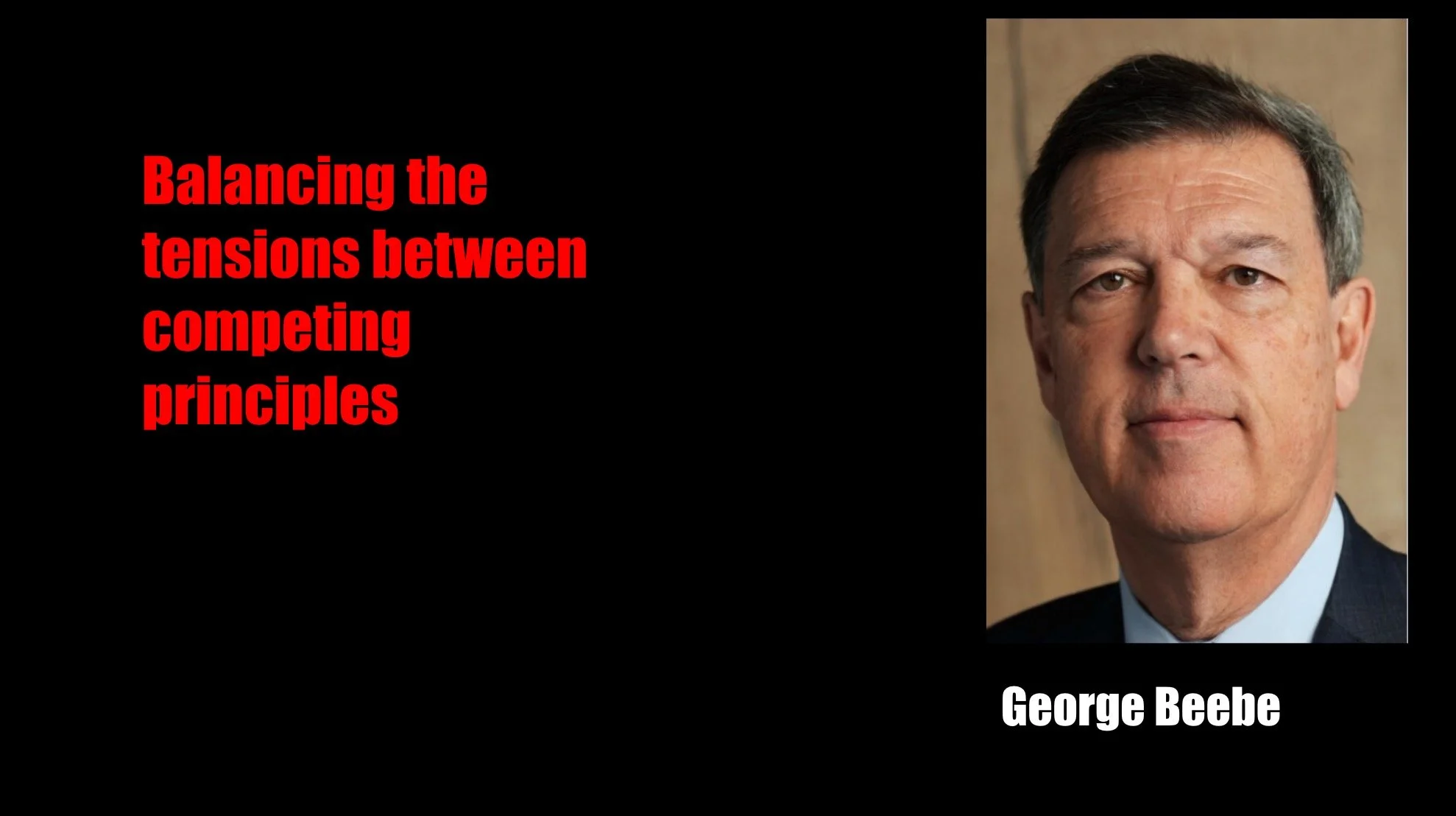
George Beebe is the director of Grand Strategy at the Quincy Institute for Responsible Statecraft in Washington. He spent over 20 years in the CIA where he headed up the Russia Analysis desk. Looking back to the Helsinki period, he said a central focus of discussions between the United States and Russia was exactly this business of balancing principles that are in conflict with one another.
“If you apply any one of them absolutely, you undermine other principles that are also important. So you have to find a balance between them. The principle of territorial integrity is in tension with the principle of self-determination of peoples. So how do you reconcile these tensions? To me, that's what diplomacy is about.”
Let’s briefly contrast these two competing principles with two examples which led to very different outcomes.
The Kosovo War of 1999 occurred when NATO launched a war on Serbia, nominally to protect the ethnic Albanian minority. Without UN Security Council approval, the US-NATO war on Serbia clearly breached the Articles Prohibiting the Use of Force, territorial integrity and Non-interference in the internal affairs of states – but the US and NATO argued they were protecting minority rights. In the end the territorial integrity of Serbia was swept aside as NATO redrew international borders and carved out a new state called Kosovo, in the process weakening a strategic competitor.
15 years later, in Ukraine, when Viktor Yanukovych was overthrown in the Maidan uprising in 2014, one of the first acts of the new ethnic Ukrainian government was to move to repeal the minority language laws which enshrined the Russian language in the Russian East of the country. This and other measures, not least the coup itself, triggered a civil war in which thousands, primarily ethnic Russians, were killed between 2014-2022. Russia partly justified its involvement in the conflict and the eventual absorption of Crimea and the Donbas into the Russian Federation as a move to protect a persecuted Russian minority – the same argument NATO used in Kosovo.
Professor Glenn Diesen, author of “The Ukraine War and the Eurasian World Order” said of these competing principles.
“In the hegemonic era, we had the luxury of not discussing these things with the Russians or others. We could pick and choose. So, in Kosovo, ‘We'll go with self-determination’ whereas with Crimea, ‘We'll go with territorial integrity’.”
Now we shouldn’t attempt to argue the rights and wrongs of those two wars today. The point is to recognize that important principles of international law are often in tension and that it is the business of diplomacy to help resolve those tensions through persistent dialogue and to try to avoid or end violence between the parties. As Winston Churchill was reputed to say: it is better to jaw-jaw than to war-war!
America, with the help of countries like Australia and New Zealand, has torn down the pillars of international law – such as the Genocide Convention, the ICC, the ICJ, the Law of the Sea and the UN Charter itself. We have moved to what could be described as bomb-based diplomacy … where the US thinks they can solve their problems with guns, missiles and sanctions. In the second part of Non-Diplomacy and its Consequences I will explore some much-needed antidotes to this aberrant way of operating.
Eugene Doyle
Eugene Doyle is a writer based in Wellington, New Zealand. He has written extensively on the Middle East, as well as peace and security issues in the Asia Pacific region. He hosts solidarity.co.nz.
This article may be reproduced without permission but with suitable attribution.