Pirates of the Caribbean and the Indo-Pacific. The White House National Security Strategy.
“After years of neglect, the United States will reassert and enforce the Monroe Doctrine to restore American preeminence in the Western Hemisphere, and to protect our homeland and our access to key geographies throughout the region.” NSS 2025.
The US has always had two central instruments of domination: overwhelming violence and unrivalled ability to project and control narratives. The bedrock of the whole edifice is, of course, the immense material resources that the American state can deploy. All three are being challenged by centrifugal forces (rise of China, resurgence of Russia, emergence of the BRICs, alternative media, etc) that are slipping beyond the US’s ability to control. The National Security Strategy released this month is, in part, an admission of this, and, in part, a denial, as its authors cleave to a mythology of exceptionalism and eternal greatness.
Atlas Shrugged
In the first part of this series I explored the underlying messaging in the Strategy’s statement: “The days of the United States propping up the entire world order like Atlas are over.”

The Strategy’s narrative effectively says, it is time for the US to set down this all-too-heavy burden of propping up the entire world and focus its attention and resources on what is best for the US. The Strategy makes clear that Europe and the Middle East, much-loved though they are, are of diminishing focus for the US. The Americas are on notice that the Monroe Doctrine is back with a vengeance (defined as The Trump Corollary, no less). Great emphasis is also being placed on the Asia Pacific region: and the US administration stresses that countries like Australia, New Zealand, South Korea and Japan will need to militarise as never before in peacetime to keep China in its place.
On China and Asia-Pacific
The White House Strategy is, unsurprisingly, groaning under the weight of contradictions. On one hand it castigates previous administrations for chasing “permanent American domination of the entire world”. Yet, whilst laying down its Atlas-like burden, it nonetheless states: “The United States cannot allow any nation to become so dominant that it could threaten our interests”.
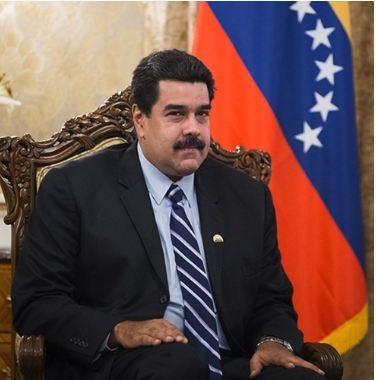
This is, of course, straight out of the Wolfowitz Doctrine – commitment to global hegemony – and represents what Brian Berlectic suggests is “continuity of agenda” (that is, don’t believe the rhetoric, look at where the missiles are falling). Time will tell if US liberal interventionism is really in the rear view mirror. Presidents Maduro, Putin, Pezeshkian and Xi would certainly wish it so.
The White House acknowledges that “the Indo-Pacific is already the source of almost half the world’s GDP based on purchasing power parity (PPP)” and that whilst that necessitates staying in the region, its strategy should be deterrence to avoid war.
“A favorable conventional military balance remains an essential component of strategic competition,” the Strategy says. ”There is, rightly, much focus on Taiwan, partly because of Taiwan’s dominance of semiconductor production, but mostly because Taiwan provides direct access to the Second Island Chain and splits Northeast and Southeast Asia into two distinct theaters. Given that one-third of global shipping passes annually through the South China Sea, this has major implications for the U.S. economy. Hence deterring a conflict over Taiwan, ideally by preserving military overmatch, is a priority. We will also maintain our longstanding declaratory policy on Taiwan, meaning that the United States does not support any unilateral change to the status quo in the Taiwan Strait.”
The Sea lanes of the South China Sea and the island of Taiwan are where the new policy could meet its most serious resistance from a China unwilling to see continued American overlordship of Asia.
The genocide in Gaza and the West’s war in Ukraine have emptied the shelves of the US military industrial complex. The US’s new approach, repeatedly referred to as Burden-Sharing in the Strategy, makes clear that vassals need to do more to support the empire.
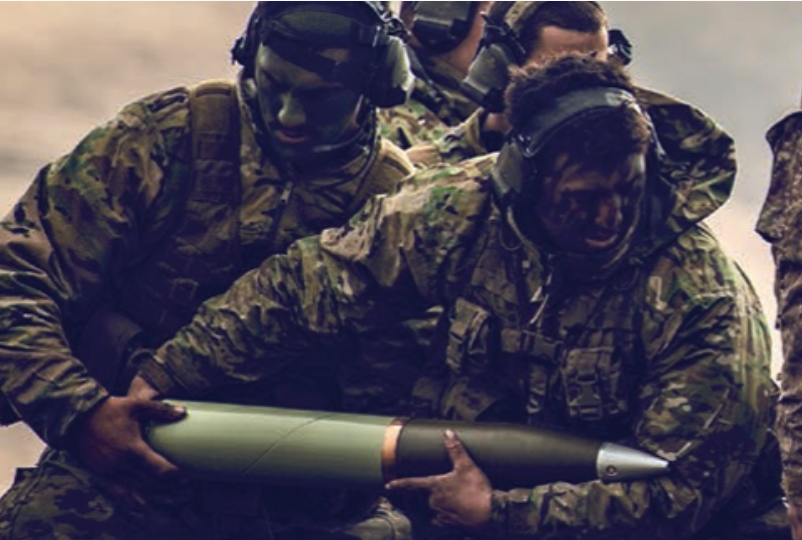
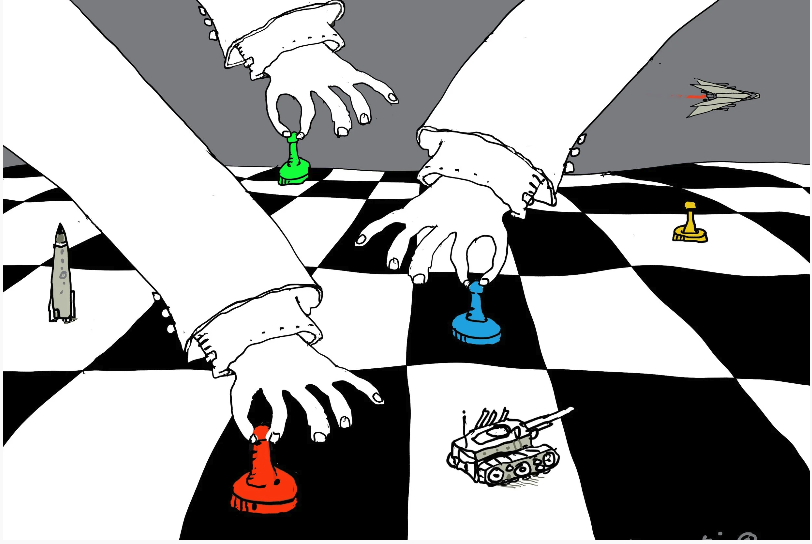
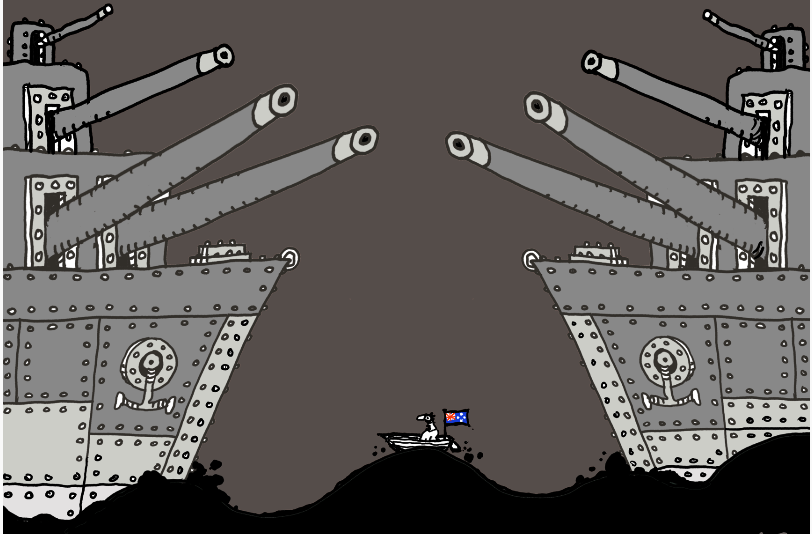
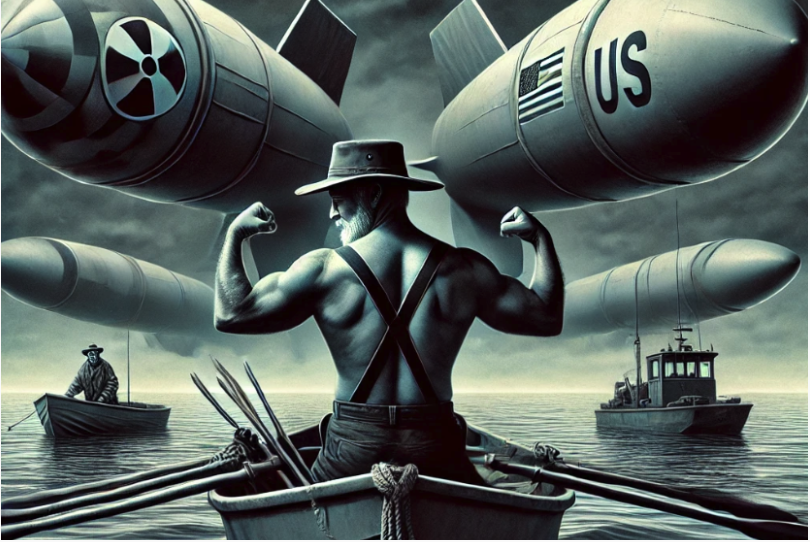
New Zealand, Australia, South Korea, Japan and whoever else the US can control will be forced to spend more and more on militarising against China. US Secretary of State Marco Rubio says AUKUS is going ‘full steam ahead’, including a $386 billion Australian commitment to the project. New Zealand is spending billions more on defence and, somewhat ludicrously, touts itself as a force multiplier for the alliance.
Political thinkers in Australia, New Zealand and the wider Asia Pacific region are divided between those that cleave to the “With the US come-what-may", and those trying to steer a path between the two behemoths.
If war comes it will be China and regional countries, including Australia and even New Zealand, who could pay the heaviest price. If – as most military analysts assess – China prevails, but at great cost, they will feel highly justified in exacting a terrible toll on any country that sided with the US.
White solidarity is one thing; wrecking your country’s future is another. Former New Zealand PM Helen Clark, a perennially sound and sober thinker, has long argued that Australasia should be friends to all, enemies of none, and should pursue a more independent foreign and defence strategy that doesn’t threaten China which is our biggest trading partner. Similar thinkers are pressing governments throughout the region.
On the Middle East and Africa
Africa gets a slender half page out of the 33-page document and the focus is primarily on commerce and resource extraction. Aid is out of favour.
“An immediate area for U.S. investment in Africa, with prospects for a good return on investment, include the energy sector and critical mineral development. Development of U.S.-backed nuclear energy, liquid petroleum gas, and liquified natural gas technologies can generate profits for U.S. businesses and help us in the competition for critical minerals and other resources.”
Trump triumphant, declares recent US-Israeli successes across the Middle East have enabled the US to focus on its own hemisphere.
“The days in which the Middle East dominated American foreign policy in both long-term planning and day-to-day execution are thankfully over.” Given the vice-like grip Israel has over the US elites I suspect this is more in hope than expectation.
White House Security Strategy On the Americas
At home the focus will be on what is clearly American-style Christian nationalism, exorcising society of DEI (Diversity, Equity and Inclusion policies) and achieving what the document describes as the “restoration and reinvigoration of American spiritual and cultural health.” This is foundational to long-term security. Making America Great Again means forging an America that “cherishes its past glories and its heroes.”
It doesn’t take much to de-code the Strategy’s message to the rest of the Americas: if you’re not ready to be our poodles, be afraid, be very afraid.

“The Western Hemisphere is home to many strategic resources that America should partner with regional allies to develop.”
“We will assert and enforce a “Trump Corollary” to the Monroe Doctrine to ensure that the Western Hemisphere remains reasonably stable and well-governed.”
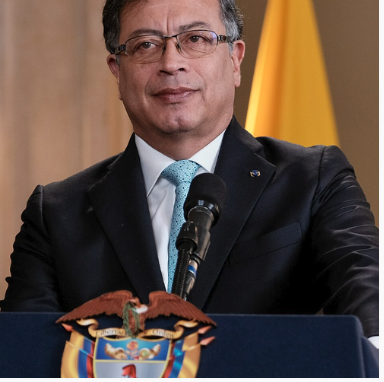
The seizing of an oil tanker off Venezuela, the military build-up, the killing of Ecuadoran fishermen, Colombian civilians and god-knows who else on the boats the US blew out of the waters of the Caribbean recently are all signals that the US has learnt all the wrong lessons from 200 years of brutal interventionism in the Americas.
Oft quoted but always worth contemplating is Antonio Gramsci’s quote, so apt as we stand on this bank and shoal of time between Atlas America and a new multipolar world order: "The old world is dying, and the new world struggles to be born: now is the time of monsters".
Eugene Doyle