Talking to the “enemy”: an interview with Russian Ambassador Stanislav Krans
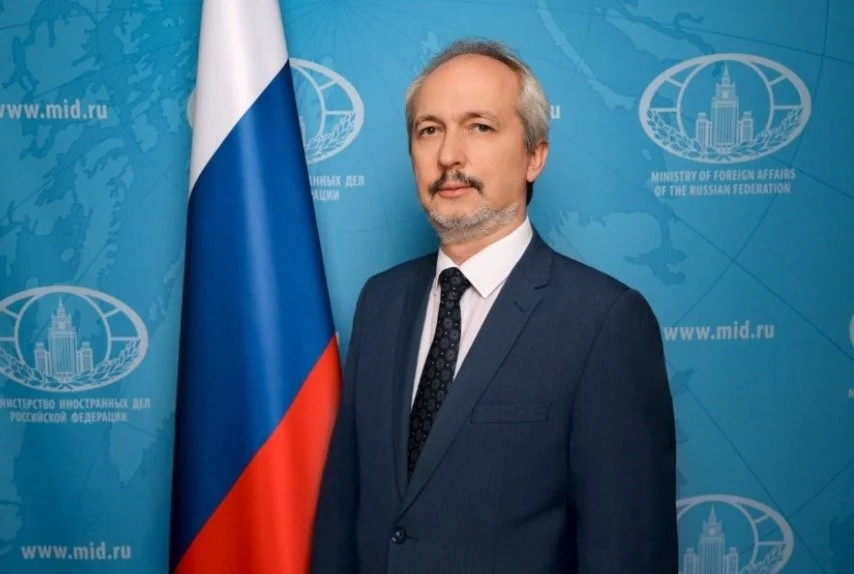
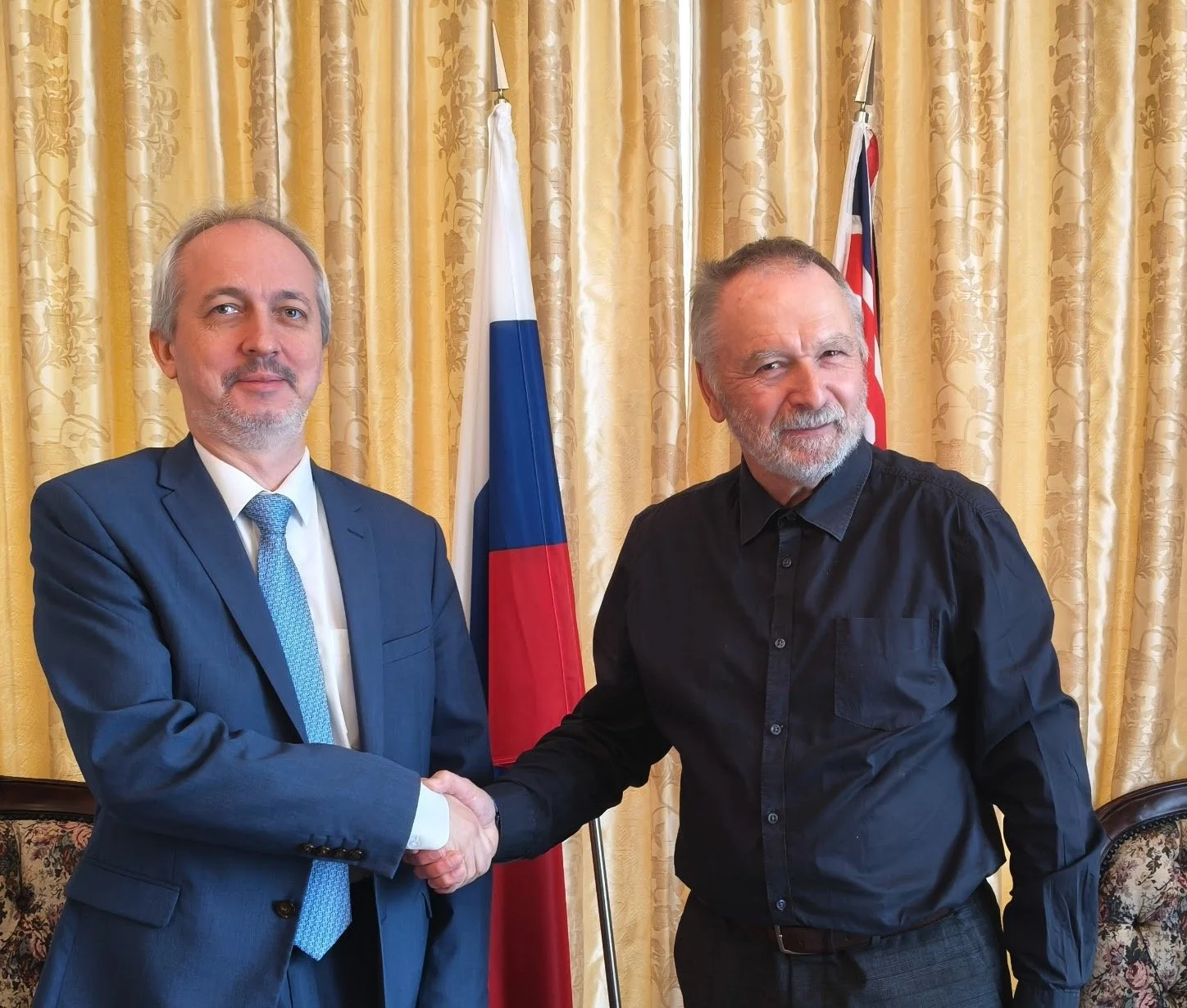
In this interview with Russian Federation Ambassador to Wellington Stanislav Krans we discussed the legality/illegality of the Russian invasion of Ukraine, the state of Russian-Western diplomacy, and the central role diplomats should play in bringing the war to an end. We also touched on what it is like to be a Russian diplomat in a Western country.
The reason I chose to interview the ambassador is because I accept as self-evident the truism that all wars end with diplomacy and the sooner we return to diplomacy the better.
How have you found operating as an ambassador here in New Zealand?
Most New Zealanders are very friendly, very open-minded people. I knew I would be a bit ignored by officials in this country, but at the same time I didn't expect the people representing the government and opposition would not be ready even to meet for some unofficial exchanges of views.
I was expecting maybe more people from the mass media will be interested to ask me about our position on Ukraine, about some geopolitics. Just a few did – The Post, the New Zealand Herald and you. So we are missing the chance to try to reboot dialogue.
My friend Ian Proud, former British diplomat who spent several years in Russia, said this week: “Diplomacy is tough, it's not about friendship. Diplomacy is about settling differences and finding ways to coexist.” As a diplomat, tell me about the role you can play.
We say that a diplomatic solution to this conflict is preferable. It's not the only option, but we prefer diplomacy. We would like to restart negotiations.
The main task as a diplomat is to talk. We are not traders, we are negotiators. We are the bridge between politicians of two countries, or multiple organizations, and of course, it's very important to have channels for communications. The main point isn’t to make us friends. The main goal is to keep communication channels open 24 hours a day, seven days per week.
What else would you like to achieve in your time here?
I came here understanding that I will meet a lot of pressure from officials, that I will spend at least a few years under this pressure. But my greatest desire is to see our nations unfreeze our relations and become friends again – to reestablish good relations between governments, between people, between our businesses, between ordinary people.
Diplomacy is not only meetings with ministers and government and the opposition, but also contacts with civil society. There is, for example, a Russian-speaking community here which is more than 20,000 people.
I believe local businesses are highly interested in expanding their sales abroad – and Russia is a huge market.
The United Nations Charter is clear: there is a prohibition on the use of force and an insistence on the territorial integrity of states. The 2022 invasion clearly breached these articles. Isn’t that black and white – a clear case of an illegal invasion?
The United Nations Charter talks not only about this issue, but also the right to defense. The 51st article gives a right for every nation to defend itself and that's what we would like New Zealanders to understand. For us, it was a reaction for the self-defense of our country.
Many people in New Zealand – and other countries – would like to simplify the problem. That’s not good. This problem did not start in 2022; there is a long history, a pre-history of this conflict that should be considered, because if you don't understand the prior history, you cannot understand what is going on now.
NATO was expanding to the east for decades. Then the Western countries, including the US and European countries, especially the UK, were deeply involved in the coup d'etat [2014 overthrow of the elected Yanukovych government]. They then started bringing in NATO forces, experts, to Ukraine and pressed the proposal to join NATO. We [made clear]: if NATO comes closer to Russia, we have to resist. We tried to do it in a diplomatic way. We sent proposals to the Americans, to European countries, just saying: please keep in mind that we have important security concerns. But we were ignored, and unfortunately we understood that the next step of this militarization of Ukraine by NATO will be the threat to our existence as a sovereign country.
[The ambassador gave a far more detailed response which can’t be reproduced in full here but it was very much in line with the positions articulated by Russian Foreign Minister Sergei Lavrov in a recent article which was planned to appear in politico.eu but was censored at the last minute. You can read Lavrov’s full article here.]
When was the last time you were in the Ministry of Foreign Affairs in Molesworth Street?
I was there twice. Both of them were protocol, courtesy calls. At this moment we are not welcomed in the Ministry of Foreign Affairs.
That might explain why there wasn't a room full of New Zealand foreign affairs officials at the Russian National Day you hosted?
They did it in a very polite way – so I appreciate it – saying that none of them will attend.
We need to establish better dialogue with New Zealand. We are trying to restart political consultations. We had a very good mechanism of political consultations on the level of at least deputy foreign ministers for decades. Then came Prime Minister Jacinda Ardern's decision to freeze political consultations [after the invasion of Ukraine]. I believe it was a mistake in regard to Russia because consultations should not be considered as support of any actions made by other countries. It's dialogue.
If we don't understand each other – or we don't want to listen to each other – which is happening right now in New Zealand – that is what we as diplomats have to fix. The main direction of my activity here in New Zealand is to restore normal communication between the two countries.
Eugene Doyle
Eugene Doyle is a writer based in Wellington, New Zealand. He has written extensively on the Middle East, as well as peace and security issues in the Asia Pacific region. He hosts solidarity.co.nz.
This article may be reproduced without permission but with suitable attribution.