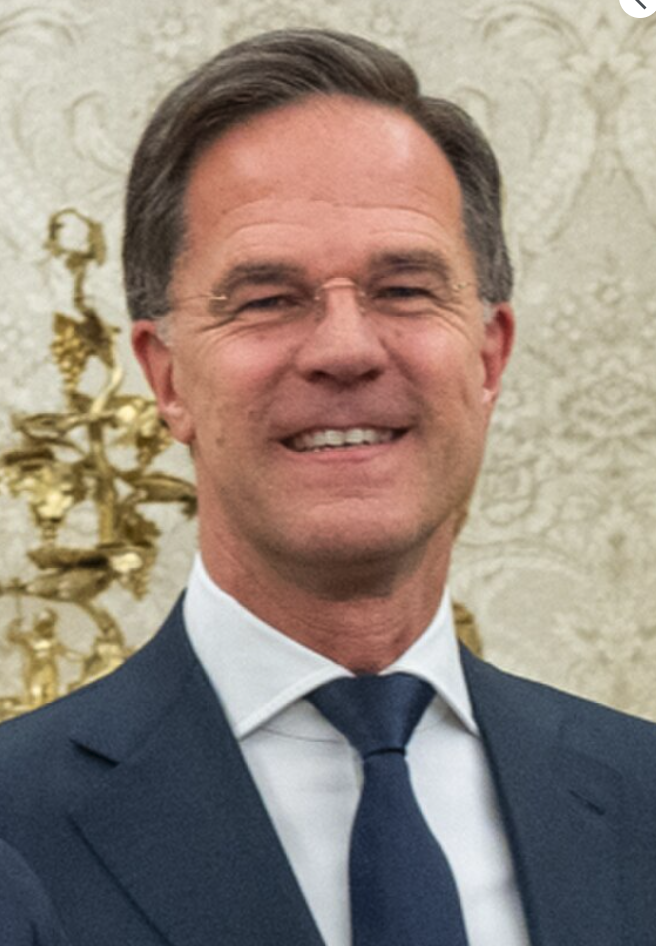
“The dark forces of oppression are on the march again,” NATO Secretary-General Mark Rutte said in a speech in Berlin on 11 December, adding Europe must prepare for war with Russia within five years.
“I am here today to tell you where NATO stands, and what we must do to stop a war before it starts. To do that, we need to be crystal clear about the threat. We are Russia’s next target, and we are already in harm’s way.”
Rutte warned that such a war could be "on the scale of war our grandparents and great-grandparents endured". One should remember that both world wars claimed tens of millions of lives.
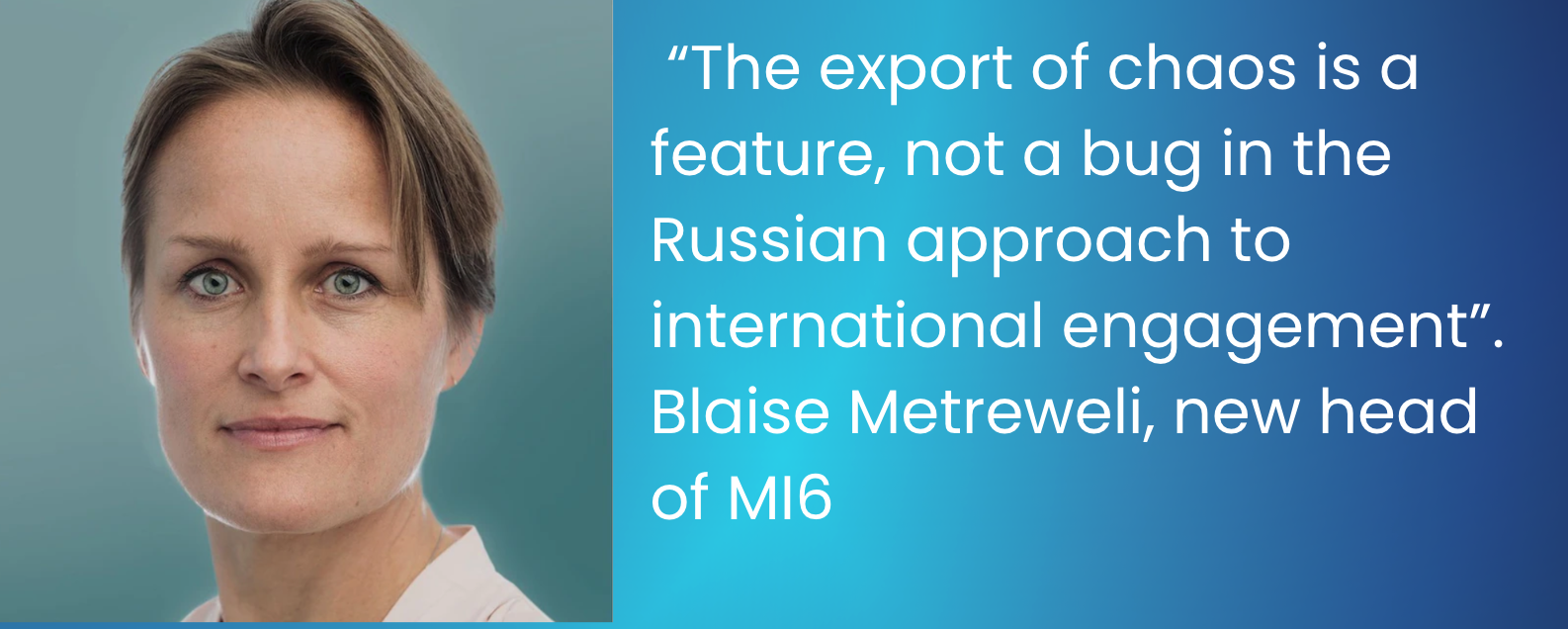
Rutte’s is a staggering and a frightening assessment which was simultaneously echoed by the new head of MI6 Blaise Metreweli: “The export of chaos is a feature, not a bug in the Russian approach to international engagement”. All this was taken at face value by the mainstream media and commentariat. To delve a little deeper, I interviewed two geopolitical thinkers I trust and value: British historian Professor Geoffrey Roberts, a fellow of the Royal Historical Society and a major historian of Soviet and Russian history, and Anatol Lieven, the director of the Eurasia Program at the Quincy Institute for Responsible Statecraft in Washington. Lieven's assessment will be the focus of my next article.
What did Professor Roberts make of Mark Rutte’s warning? Was it intelligence-driven or budget-driven? Was it real or was it trying to frighten the public before major hikes in military-industrial spending?
“It's classic rhetoric: ‘We need to prepare for war in order to maintain peace’,” Professor Roberts told me in an interview this week. “But what history shows is that preparation for war actually makes war more likely. You create the reaction which leads to actual war. The rhetoric itself is creating reality.”
On record this week were President Putin, Foreign Minister Lavrov and Kremlin spokesperson Dmitry Peskov who all slated Rutte’s speech as irresponsible. The Russian position is that a comprehensive long-term security architecture for all of Europe should be prioritized.
Europe’s strategy to prolong the war in Ukraine
The recent change in US foreign policy and its pressure to end the conflict has triggered a powerful counter-reaction in Western Europe. Critics argue the EU is prepared to fight to the last Ukrainian to give itself time to build up the military resources to either resist or attack Russia without the Americans. EU countries have made commitments to increase defence spending to 5% of GDP by 2035. Disrupting the peace process, however, will cost yet more Ukrainian lives – but in their calculus that is a price worth paying to turn Europe into a steel porcupine.
The elites in Brussels may fear peace, but the populations of Europe have good reason to fear war.
“The clock is ticking down,” Professor Roberts says. “If the Ukraine war comes to an end that really takes the bottom out of the rhetoric. The majority of European citizens won't buy into this project of militarization. And if they don't buy into it now, they're certainly not going to buy into it in the future when there's peace between Ukraine and Russia, and also when they see the Americans and Russians reconstructing Ukraine.”
Risk-taking and the lost art of diplomacy
If there was a concern, a genuine concern, that war was coming, wouldn't you engage in intense negotiation? Wouldn’t you do everything possible to stop it? Yet the Europeans, and previously the US under Biden, treated it as a badge of honor to refuse to talk to the other side or engage with them in diplomacy. Militarisation seems to be the only language Europe now knows.
“I've been thinking a lot recently about the road to the First World War,” Roberts said. “Today's situation is very reminiscent of that, and the whole project of militarization of European societies that was happening over decades before the war.
“The other process that's ongoing for 20 years or so before the outbreak of the First World War is the militarization of diplomacy. In effect, diplomacy is being displaced by the deployment of military force to extract political concessions from your adversary.”
Russia’s invasion is clearly a case in point. So too is the NATO expansion project and the hundreds of billions of Euros/dollars poured into a proxy war (as the US Secretary of State calls it) that was intended to break Russia and drive it out of the ranks of the great powers.
“If you have this atmosphere of tension and confrontation, and all this kind of absurd rhetoric, then accidents are possible, inadvertent escalations are possible.
“The other thing that's happening in the run-up to the First World War is that political leaders in different states are more and more willing to risk a catastrophic war.”
Demonization is not a strategy, posturing is not policy
Yet the reality on the battlefield indicates that the Russians will win an ugly victory and that their slow attritional war has brought the Ukrainian forces to a point in which we are now seeing faster Russian gains. Prolonging the war will weaken Ukraine, not strengthen it.
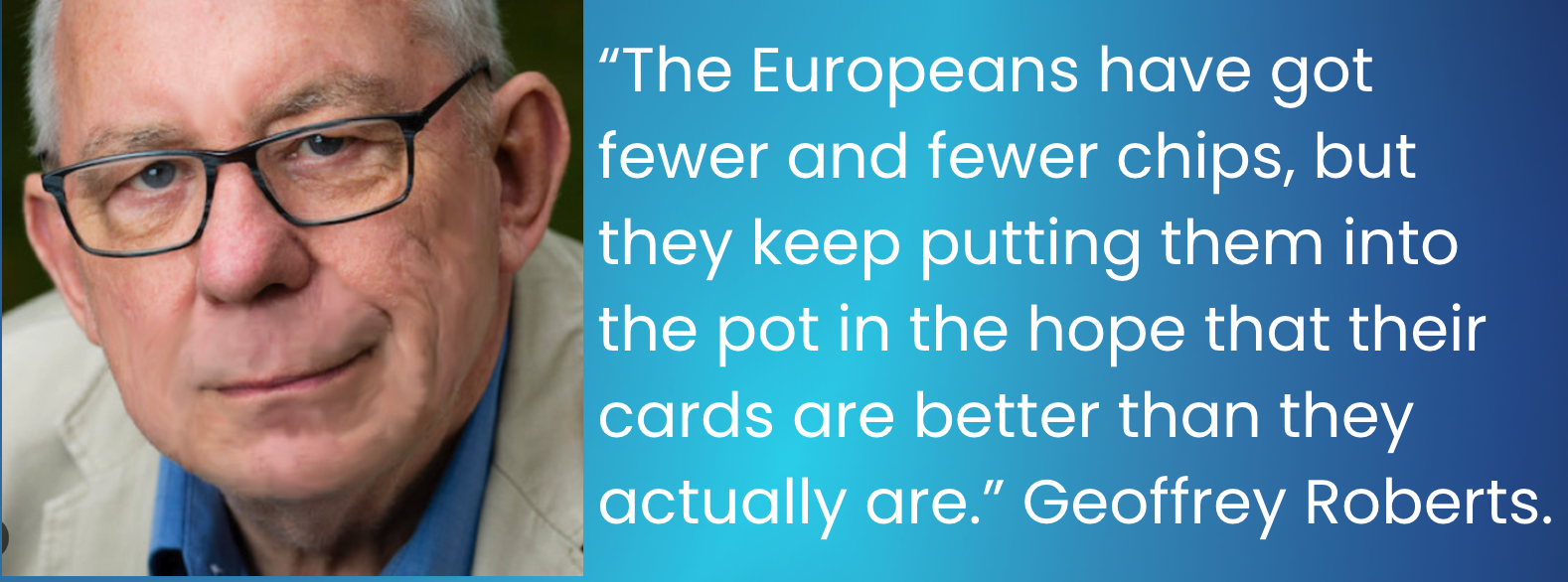
“The Europeans have got fewer and fewer chips, but they keep putting them into the pot in the hope that their cards are better than they actually are,” Roberts says.
The Europeans – who say they want to be at the table – cannot resist the language of demonization. Mark Rutte: “During the Cold War, President Reagan warned about the ‘aggressive impulses of an evil empire’. Today, President Putin is in the empire-building business again.” That’s the opposite of traditional diplomacy – of trying to negotiate differences, even with enemies.
“The demonization of Putin – well, that goes back at least 15 years,” Professor Roberts says. “It's a long-term process, culturally and politically, of demonizing Putin, of othering Russia, of developing this anti-Russia rhetoric, of Russophobic elements in Western societies coming more and more to the fore.
“European countries are still committed to putting Putin on trial as a war criminal. How can you engage in diplomacy and negotiate peace if part of your project remains actually arresting and trying to convict Putin?
“And of course, the latest thing they've done is set up this tribunal to investigate extracting reparations from Russia. As a historian, I have to tell you that there is no case in history where the country that wins the war pays out reparations, so it's a completely fantastical project.
“What Europeans are going to try to do is confiscate those frozen Russian assets – a chunk to be spent on repaying Ukrainian loans to EU member states, another big chunk of money to be spent on the purchase of European armaments, and then presumably, there will also be another big chunk of money which will disappear into the bottomless pit of Ukrainian corruption.
“They're actually punishing Ukraine, aren't they? They're punishing Ukraine because they're going to waste these funds if they get their hands on them, on continuing the war, when, if they step back from that, and use the assets as part of a bargaining process in relation to peace, they could actually secure quite substantial benefits for Ukraine.”
Empathy is required, not sympathy
Roberts says it is important to accept that it was Putin who started the Ukraine war – but not to stop thinking at that point.
“He started it as a preventative war because he was concerned about NATO military buildup of Ukraine – Ukraine becoming a threatening enclave on Russia's border. He feared for a future war involving not just Ukraine, but NATO as well. So it is a preventative war. Nevertheless, Putin attacked.”
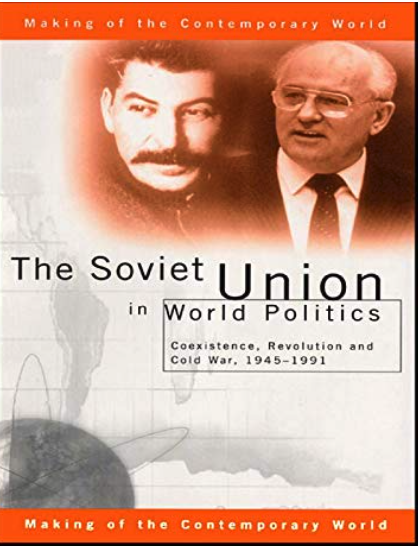
“In the West they have these rhetorical constraints that you can’t even permit yourself to have that frame of reference. I'm a historian, and the fundamental thing about my kind of history is the exercise of empathy. It's all about seeing the world through other people's eyes, because if you can do that, if you can understand what motivates them, then, to a certain extent, you can anticipate what they're going to do in the future. And the fundamental problem about the Russophobes and those buying into the anti-Putin, anti-Russia rhetoric at the present time is that they're completely lacking in empathy for the Russian point of view.
“The problem is the political leadership have trapped themselves by their own rhetoric. They're stuck with it until it completely and utterly fails – or we're stuck with them until a different set of European leaders comes into power unencumbered by these rhetorical constraints and can actually affect a shift in policy and attitudes towards Russia.”
Eugene Doyle