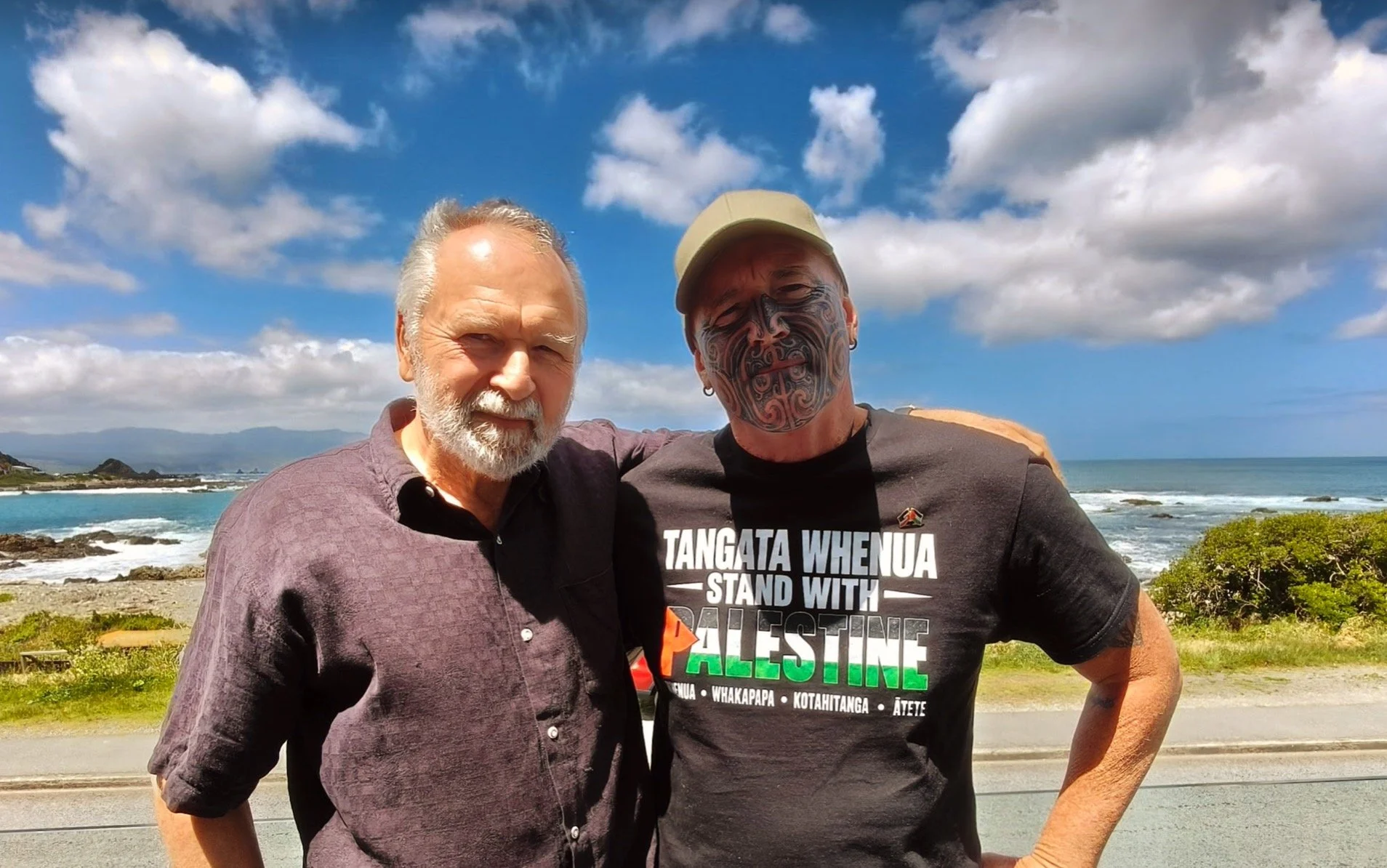
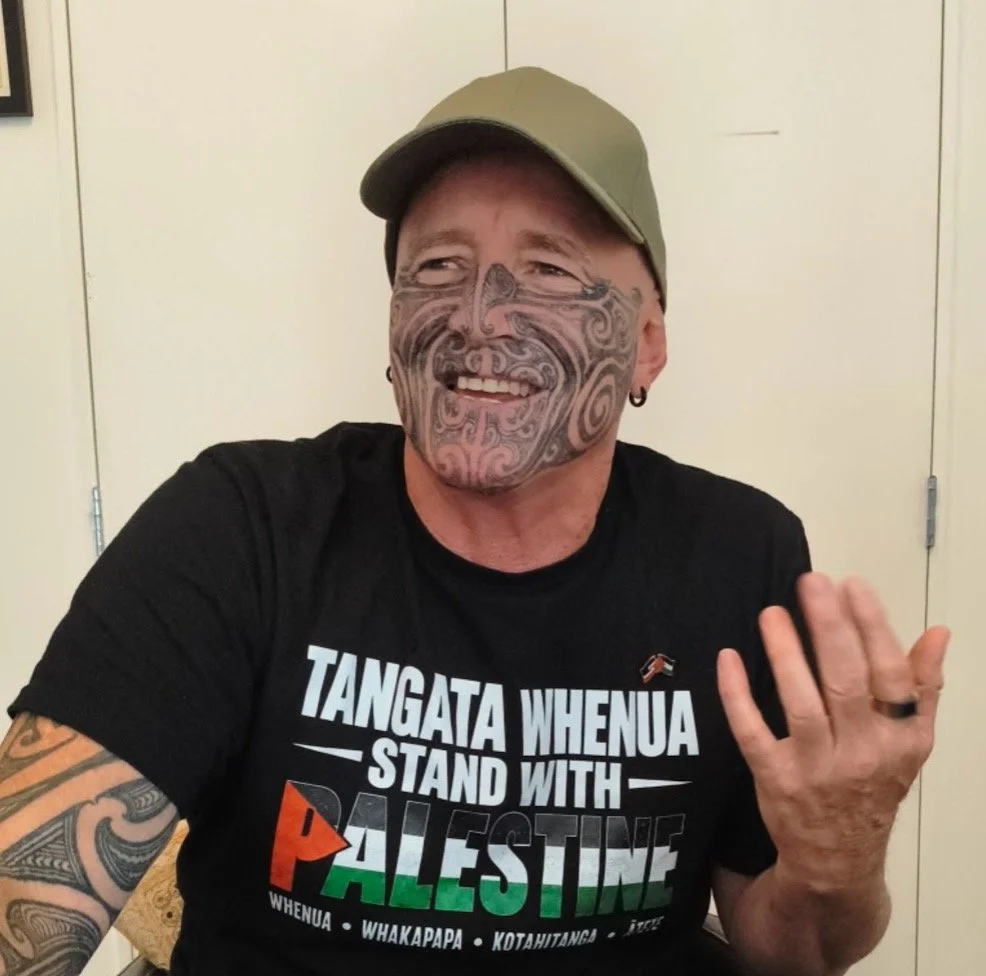
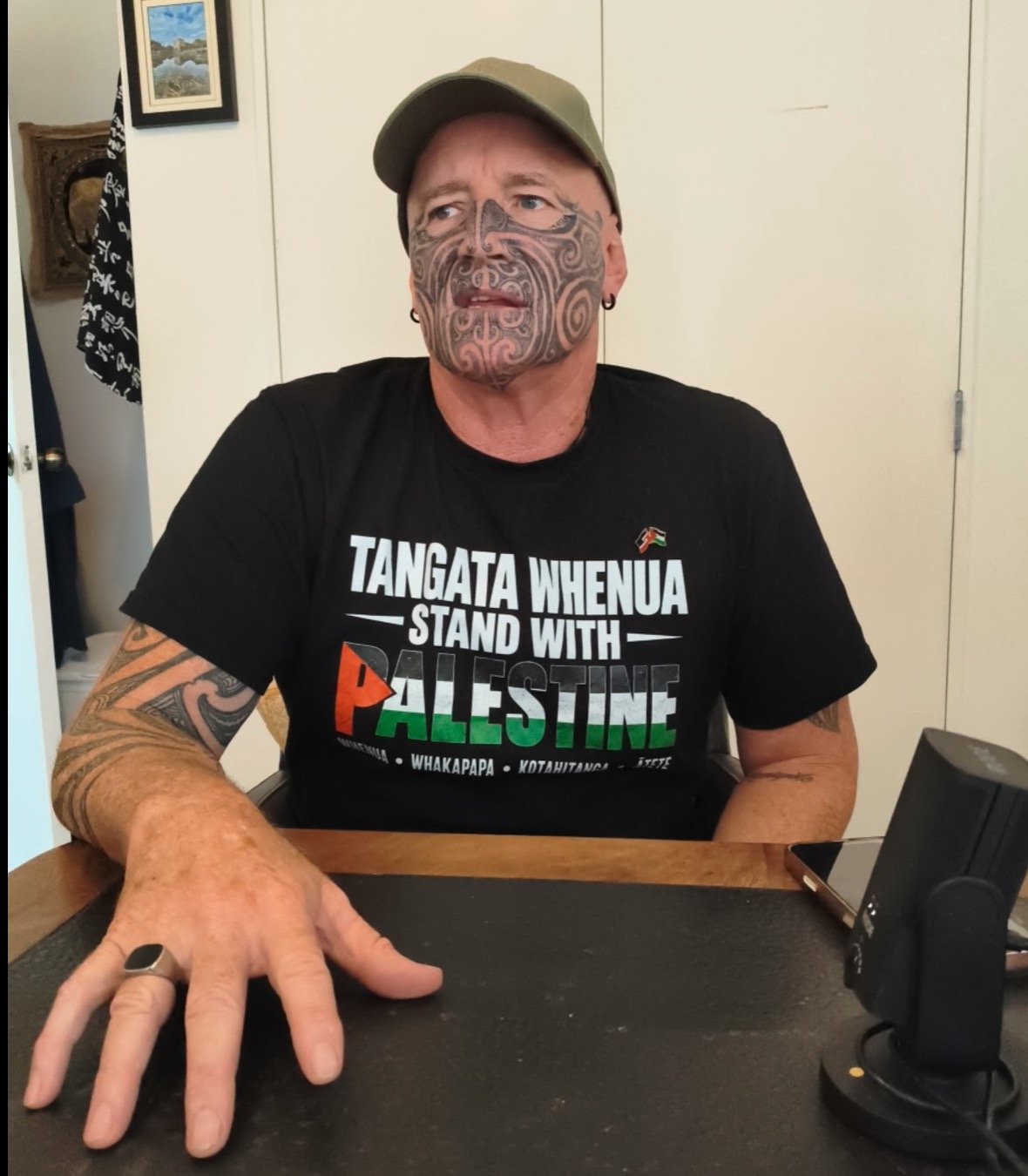
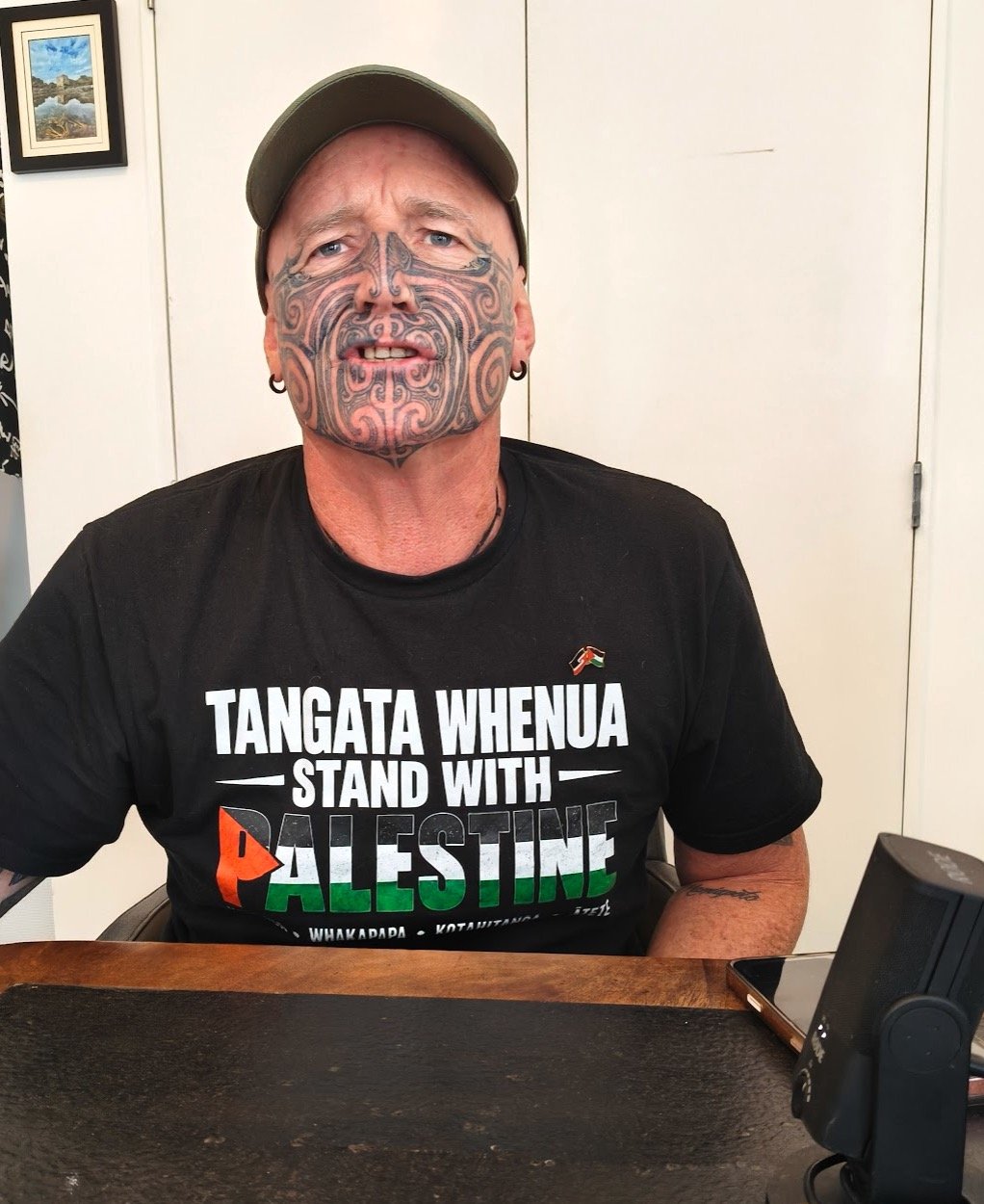
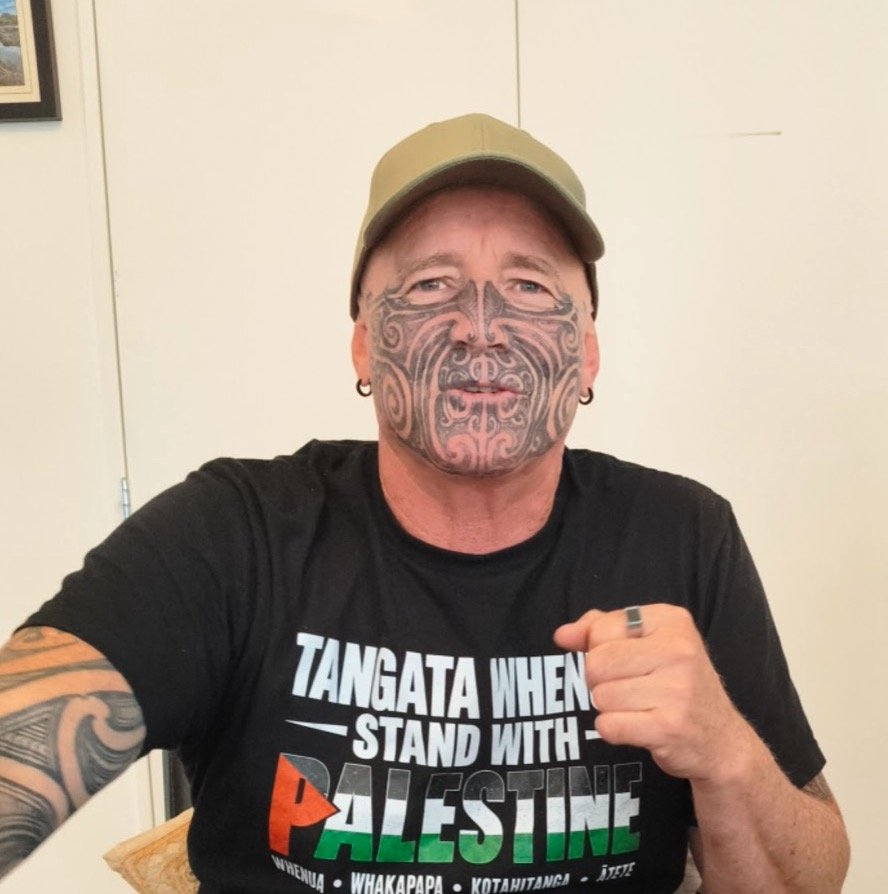
I sat down with Māori activist Hāhona Ormsby this week to discuss the painful topic of his latest mahi (work): confronting fellow Māori, particularly leaders, who are supporting Israel in the time of genocide. Ormsby is now a national figure of some importance as he has come through the fires of Hell – the Israeli military prison system – and returned to Aotearoa/New Zealand with the clear message: supporting the Palestinians is core business for indigenous people.
Ka nui te mihi ki a koe, e hoa. Firstly, tell me about the decision of the 18 leaders of the Pacific Islands Forum in September to welcome Israel as a partner.
For me, this shows us the tentacles of Zionism going out across the world. What's happening here in New Zealand is we're seeing tangata whenua (Māori) being taken over to Israel, using the hook of Christianity which is a big thing for Tangata Moana (Pasifika people). They’re getting them to Israel with Christianity and the lure of money.
I can’t help wondering if this is a counter-move on the chessboard because China wants to come into the South Pacific, right? And the United States don't want China coming in, so Israel playing the Christian Zionism card may be a good move.
So you’re saying the Israelis are weaponising people’s deeply-held belief systems?
It's part of the ongoing colonisation of the South Pacific – and it coincides with the colonisation by Zionism of Palestine. They are singling out tribes with deeply-entrenched Christianity. In the islands they're targeting communities that are exactly the same.
This is part of a global strategy of networked power. Each of those Pacific states has one vote in the United Nations, even if most of their populations are tiny. Here in New Zealand, why should Māori resist these machinations?
The history of our people is in some ways similar to the Palestinians. We know what it is to have our whenua (land) taken. We know what it is to have our voice taken. And to have entire whakapapa lines (bloodlines) severed, right? We see that today in Palestine – entire families and all their hundreds of years of history wiped out with no one to tell the stories of their ancestors ever again.
You were on the Global Sumud Flotilla to Gaza that was intercepted in international waters by the Israelis earlier this year. Like hundreds of activists from around the world you were kidnapped, taken to Israel and badly mistreated. And now you’re back, mobilising people. So tell us about the Māori world today, what's the state of that discussion inside Te Ao Māori on this issue of whether to support Israel or Palestine?
Since I’ve come back from the flotilla I’ve been so pleased with the growing momentum in support for Palestine. More and more Māori recognise our shared history of colonisation with the Palestinians and are very supportive of Palestinians fighting to keep their whakapapa (bloodlines), to keep their whenua, their land, and their own tino rangatiratanga (sovereignty).
Māori leaders like the chair of the Northland Regional Council have travelled on all-expenses-paid trips to Israel, in the midst of the genocide. As a Māori, how do you see this?
There are some great leaders that were invited to go on that same hīkoi to Israel – like Māui Solomon – who declined the invitation. That’s a good starting point.
It was mainly a party of Ngāpuhi Māori leaders – who were taken to Israel, wined and dined in five-star restaurants, five-star hotels, to show what an amazing place Israel was. I was angered by this and reached out to have a meeting with some of them. Which we did last week.
Pita Tipene asked me: ‘Why are you angry that I went?’ I was really amazed by that, and I said, "Matua (elder), as tangata whenua (a person of the land), you know what colonisation is.”
He acknowledged what the Israelis were doing to the Palestinian people wasn't on. He acknowledged the shared experience of colonisation for our people and the Palestinians. Ex-TV3 news anchor Neil Waka was also on that trip. He doesn’t acknowledge there is a genocide going on. Given our history of colonisation, you have to ask why he sided with the coloniser?
Our tūpuna, our ancestors, fought hard against colonisation back in the 1800s. All the work that they did, including Te Tiriti (the Treaty of Waitangi between Māori and non-Māori) and living side by side with Pākehā (non-Māori) in this country … all that hard work is being sold because these people, the Neil Wakas, are going overseas to actually do business with people who commit genocide, who are colonising another country.
What sort of response do you get from other Māori?
Most Māori are with us, not them. There have been so many whānau (relatives) that have reached out to me and said “These are kūpapa, these are traitors to Māori. You know, this is blood money. They're selling the souls of their tūpuna (ancestors) doing this”.
I think the majority of tangata whenua stand with Palestine – 70%, maybe even 80%, through that understanding of colonisation and what has been taken. The problem is those who, through Christianity – like Destiny Church – are being targeted and manipulated.
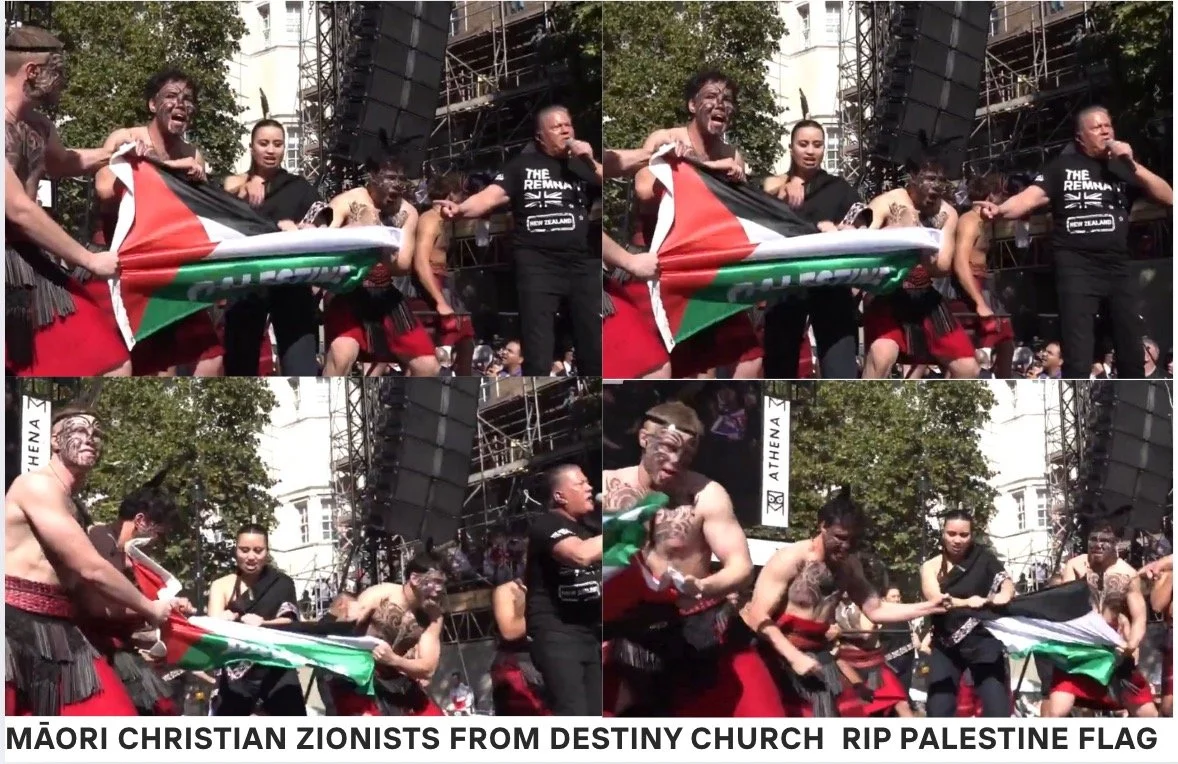
I know there are two other big Māori groups that are down to travel there next year. So my work is to get out and talk to as many leaders, iwi (tribal) chairs at Waitangi (annual national gathering in February), and say, ‘Hey, this is not on. This is blood money, right? This is the lure of pūtea, the lure of money.’
So, for you, there is a stronger link to Palestinians, than to Israelis … yet our government and media say we share closer values with Israelis.
Colonisation is very much unfinished business in this country so seeing Māori work alongside Israel is painful for so many of us. Our tikanga (values) says the whenua, the land, is life-sustaining. Understanding that and understanding what is happening in Palestine where the whenua is being taken means we have to stand with the Palestinians. The Palestinians are the people of the land, they are the indigenous people, the tangata whenua of Palestine.
What other values guide you?
We support indigenous people right around the world. The Palestinians are whanaunga (family), they are our cousins in the sense that all indigenous people are interconnected. The same values always come up: land, language, whakapapa (ancestors/bloodlines), history, settler colonialism. That’s why we should support each other.
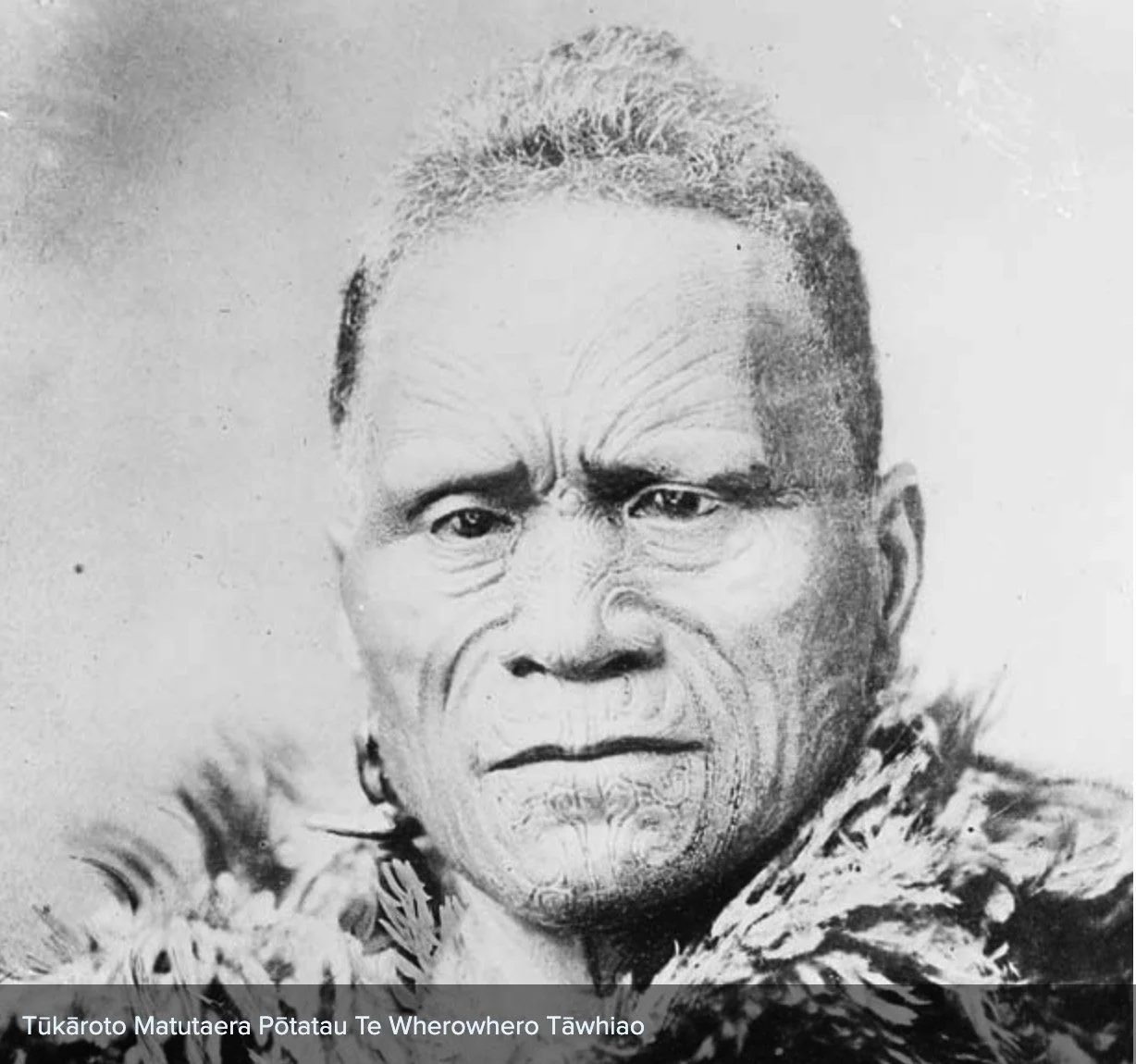
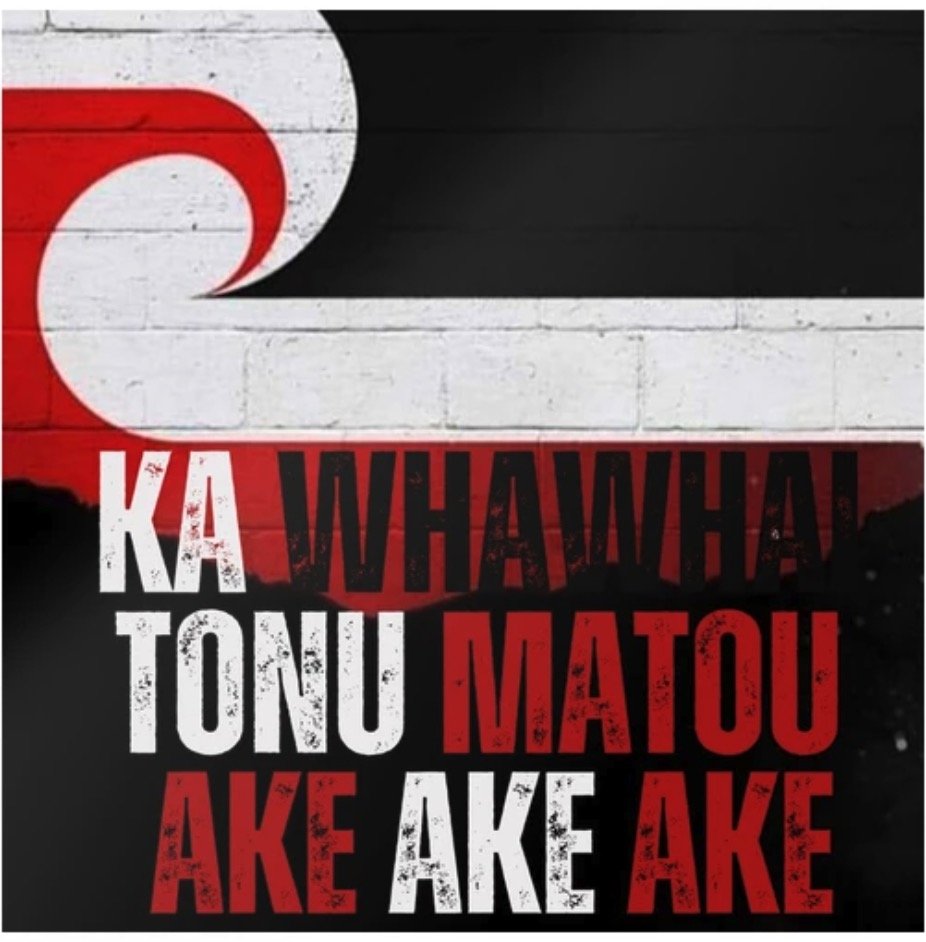
Rewi Maniapoto [the hero of the battle of Ōrākau in 1864] is an inspiration for me. He didn’t give in to colonisation. He said: Ka whawhai tonu mātou, ake, ake, ake. We will fight on, forever and ever and ever. And here we are!
Eugene Doyle