Non-Diplomacy and its Consequences. Part Two.
In this second part of Non-Diplomacy and its Consequences, based on a lecture I gave recently at Te Herenga Waka Victoria University of Wellington, I will explore some much-needed antidotes to the West’s current obsession with bomb-based diplomacy. Thanks to Senior Lecturer Ramon Das for the invitation.
Empathy is not sympathy; it is something far more powerful and seriously under-valued in Western diplomacy today. Without it, we end up in the current mess the world finds itself, riven by tensions, hostility, threats of annihilation and the horrors of war.
I believe there is a kind of genius to empathy … the ability to look at the world from another person’s point of view, to recognize that perspectivism is natural and powerful and that we have to exert mental agility to avoid being captured by our local, cultural and ideological biases.
When I interviewed Professor Geoffrey Roberts, a major British historian of Russia, last year, he told me:
“I'm a historian, and the fundamental thing about my kind of history is the exercise of empathy. It's all about seeing the world through other people's eyes, because if you can do that, if you can understand what motivates them, then, to a certain extent, you can anticipate what they're going to do in the future. And the fundamental problem about the Russophobes and those buying into the anti-Putin, anti-Russia rhetoric at the present time is that they're completely lacking in empathy for the Russian point of view.”
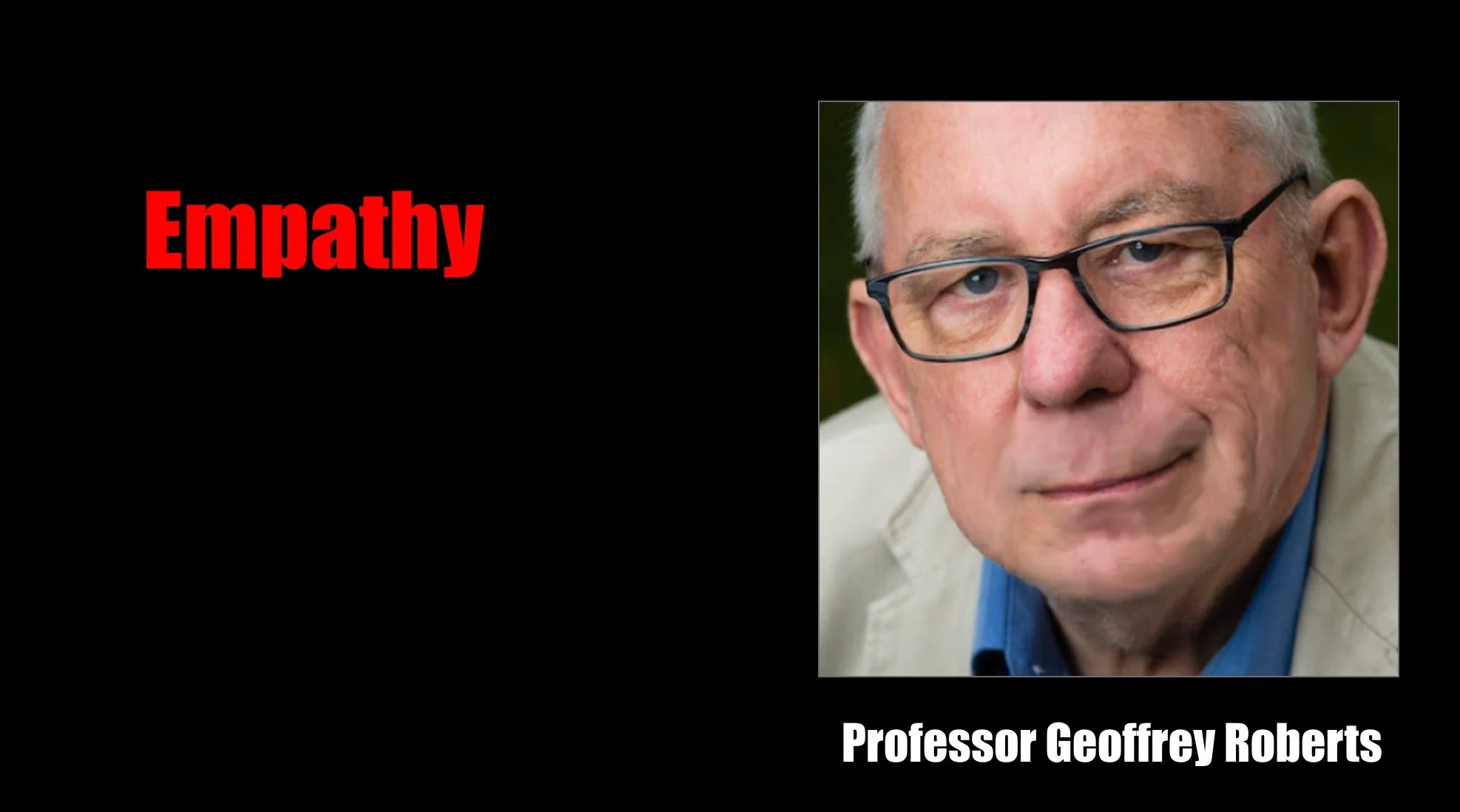
Professor Roberts isn’t saying the Russians are necessarily right; he’s saying you had better understand them to avoid all sorts of tragedies.
Non-diplomacy: Hugging your mates but shunning your adversaries
In recent years what passes for diplomacy in the West is hanging out with people who are on your team. Western leaders have developed this repellent habit of hugging each other – literally hugging each other constantly – whilst refusing to talk to the other side – the Russians, the North Koreans, the Iranians, the Cubans and so on.
As former UK diplomat Ian Proud told me:
“Diplomacy is not about going to summits where you meet lots of people who already agree with you. That's not diplomacy, that is theatre."
Chris Hedges reminded us recently that empires need competent and experienced diplomats. But when we look at the gutting of the US State department and the insertion at the top of real estate agents and grifters, like Steve Witkoff and Jared Kushner, you know something is rotten in the Western empire's capital.
Demonization
Was Ismail Haniyeh, the Hamas leader, a terrorist and a monster? Or was he a resistance leader faced with impossible choices? Is Libya today better off now that the West succeeded in killing Colonel Gaddafi and ushering in 15 years of civil war? Is President Putin another Hitler or the man who saved Russia? I won’t attempt to answer those questions but I will say that the West always demonizes its adversaries. It may be a brilliant way to enlist a gullible home population – but demonization gets in the way of communication and is therefore part of non-diplomacy.
In the past couple of years that kind of thinking has seen multiple US-Israeli strikes that killed negotiators in the midst of negotiations and deadly attacks on embassies and political leaders – most prominently Ayatollah Ali Khamenei of Iran.
Qatar's Prime Minister at the time of the assassination of Ismail Haniyeh said: "How can mediation succeed when one party assassinates the negotiator on the other side?"
No wonder President Trump hid in a catering container recently when he was leaving Turkey! That is gold-plated non-diplomacy.
Failure to keep promises.
When the US pulled out of the JCPOA nuclear agreement with Iran during the first Trump Administration – that was a serious failure to keep promises. When it committed to the Memorandum of Understanding after 40 days of war in February-April and then attacked Iran again, that was a failure to keep promises.
Canada’s PM Mark Carney said recently: “Our government understood, before many, that America would transform all of its commercial relationships, that it would put a series of tariffs on its closest allies and use economic integration as a weapon. We recognized that sometimes its signature was written in pencil.”
The problem with this kind of behaviour is that nobody now trusts the US and that makes it really hard to get to new agreements.
Part of the tradecraft of diplomats and analysts is in helping their states understand the unique culture, political dynamics, and so on, of another country. A couple of months ago I interviewed Dr Reza Nazar Ahari, the Ambassador of Iran. He provided some fascinating analysis into why the Western strategy on Iran has been so disastrously flawed. He told me:
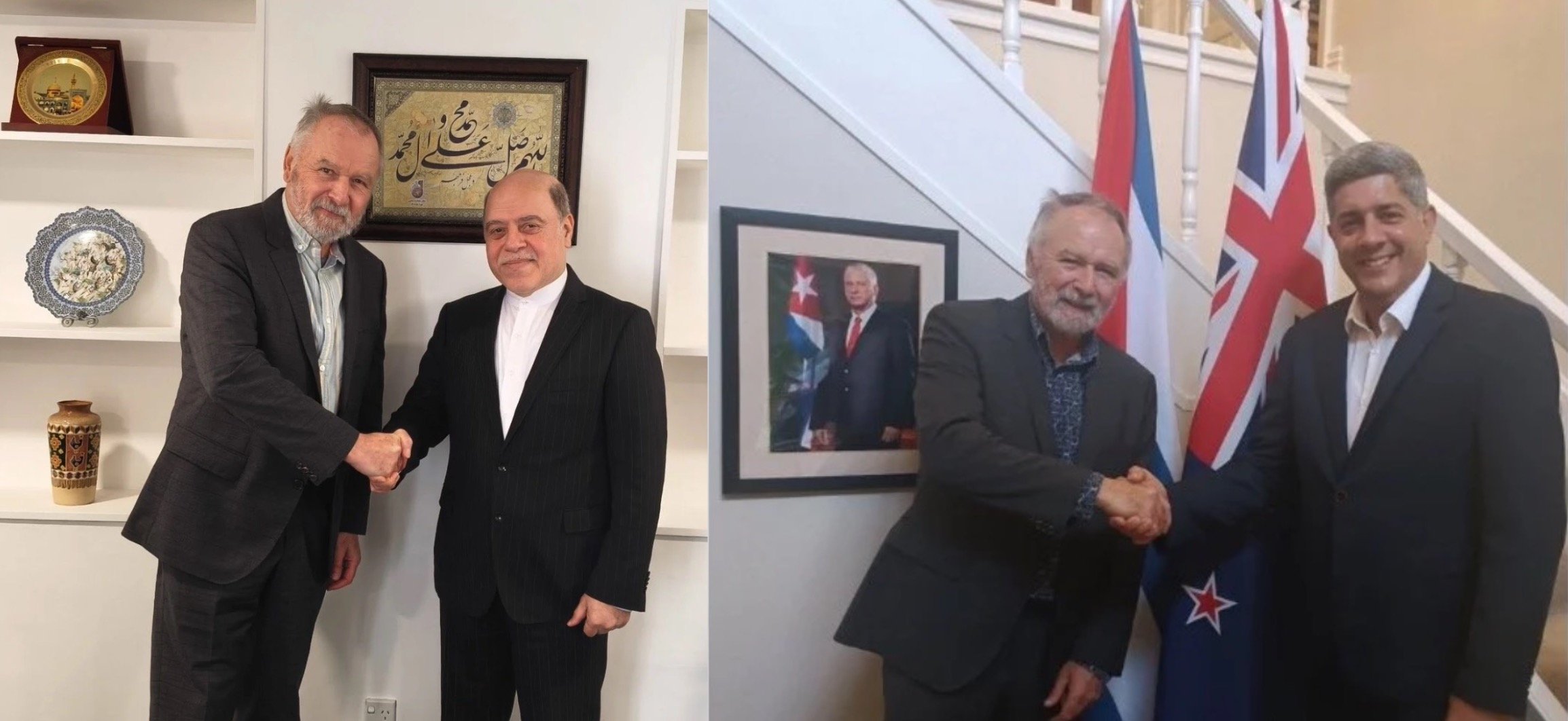
“When you look back a century, when the British Empire wanted to have influence in our region, they sent their scholars, their scientists, their researchers to our countries.
“They lived with us, and understood the identity of the people. I’m not arguing about bad decisions or good decisions, but the decisions were always made through that very close study. Today “expert” Americans just sit at their desks looking at the internet without knowing what happens in the heart of Iranians, in the mind of Iranians.”
So I said to the ambassador: What you are suggesting is that an at-distance unfamiliarity with Iranian culture has led to strategic blunders that have hurt not just Iranians but Americans and the West.
“Exactly. Americans started their war against Iran on the basis of what they did in Venezuela, and also what they were told by Israelis – “You target this, you kill these people, and all the people will come out to change their government.” It was very simplistic, very superficial, which helps explain why they failed.”
The first story I ever had published was about visiting the outside of the US embassy in Tehran in 1980 … during the hostage siege that started in 1979 and ended in 1981. Since then there has been no US diplomatic presence in Iran … and I think that is quite telling.
Driving your adversaries into alliances against you.
Western grand strategy in the 1970s, 80s and 90s had as a central tenet the need to keep the Russians and the Chinese apart. Nixon’s opening up to China, the One China policy, and Reagan and HW Bush’s embrace of Gorbachev’s Glasnost and Perestroika, all had sound strategic logic behind them: keep your friends close but your potential enemies closer.
Geopolitical thinker Zbigniew Brzeziński, national security advisor to Jimmy Carter, said an even bigger threat to US dominance than a rapprochement between Moscow and Beijing was if Russia, China and, heaven help, Iran formed an alliance. Biden and Trump have achieved just this and – for good measure – Trump may also have (and I emphasise may have) driven India off the fence and into the arms of the other great powers of Eurasia.
War, suffering and possible defeat: Ukraine
So this lecture is about “Non-diplomacy and its consequences” The most obvious is war. When traditional diplomacy fails, you have war. We have that today in Iran, in Lebanon, in Syria, throughout the Gulf States, between Russia, Ukraine and the West and many other theatres of conflict. That’s a very good consequence if you are part of the Military-Industrial complex; it is a terrible consequence if you are a human being.
Restoring real diplomacy for a better future
I believe we should honour the United Nations Charter, uphold the Genocide Convention, the Universal Declaration of Human Rights, the Nuclear Non-Proliferation Treaty, the Geneva Conventions and the Rome Statute.
One example: Serious transgressions – whether by Russian, Israeli or American leaders – should face judgement at the International Criminal Court.
Finally, I think the West has to give up its racist exceptionalism and rediscover the art of diplomacy and the acceptance that peace and dialogue are the cure to the many ills of this world.
Eugene Doyle
Eugene Doyle is a writer based in Wellington, New Zealand. He has written extensively on the Middle East, as well as peace and security issues in the Asia Pacific region. He hosts solidarity.co.nz.
This article may be reproduced without permission but with suitable attribution.