Uneasy lies the head that wears the Saudi Crown.
The Fall of the House of Saud. Part 1. According to the Wall Street Journal, the Crown Prince of Saudi Arabia, Mohammad bin Salman (MBS) is constantly moving from bunker to bunker these days to avoid assassination attempts. MBS is paying the price for ignoring Rule #1 of his grandad King Abdulaziz, the founder of Saudi Arabia: don’t launch military adventures into Yemen! The dynasty’s founder had fought and won in Yemen but at such a cost he felt it was not worth repeating. Folklore says his last words were an old aphorism: “The good or evil for us will come from Yemen.”
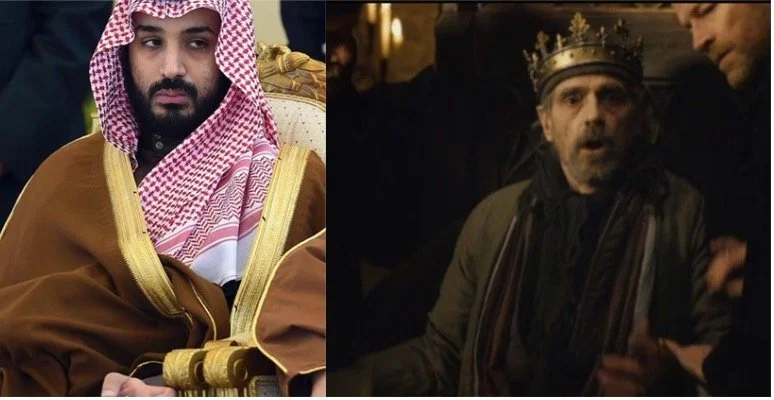
The Greeks invented the concept of hubris for just such a man as MBS who is heedless of long precedent, wise counsel and his better angels. He and Donald Trump are the Twin Towers of Hubris, Trump blundering into Iran, MBS back into Yemen. Given the importance of The Kingdom to our economies, it is well worth understanding what is going on.
Outside the mainstream, there is a gathering weight of analysis that suggests that MBS, even the House of Saud itself, may be headed towards downfall.
On the surface this seems implausible but I have listened to astute thinkers such as Iranian academic Seyed Mohammad Marandi warn for the past couple of years that such a downfall was more than possible if the West and the “family dictatorships, the monarchies" of the Gulf chose war with Iran.
Immensely wealthy, armed to the teeth, and surrounded by powerful, if reluctant, allies, the dynasty may yet weather the gathering storm. There are certainly important elements in society that have welcomed his reforms. But Marandi, partisan though he is, has been far more prescient than all the Western leaders, market analysts, and corporate media pundits who, for example, anticipated a swift victory in Trump’s war on Iran. Now MBS has reignited the war in Yemen – and the dogs of war may turn on their master.
“With threats mounting, the crown prince is shuttling between heavily guarded palaces equipped with bunkers. The violence threatens his ambitions to turn Saudi Arabia into a global tourism and investment hub,” the WSJ wrote on October 12.
Such ambitions as MBS’s Vision 2030 obviously require peace and tranquility, not F35s and Patriot batteries.
Hussain al-Bukhaiti, a Yemeni journalist close to the Houthis said this week: “This is the beginning of the end for Saudi Arabia; if they continue (with the war on Ansar Allah/the Houthis), their end will come from Yemen.” As I typed those words, news came in that the Houthis had struck the headquarters of Saudi oil giant Aramco.
If the Houthis don’t get him, there are plenty of others in the queue to do so. His Guards and secret police are keeping a close eye on top military figures, restless princes and the large number of Saudi tribal leaders who have long bristled under his authoritarian mis-rule. Having muscled out the previous crown prince, Mohammed bin Nayef, in June 2017, MBS further tightened his grip on power later that year by the famous seizure of his fellow princes, holding them in the Ritz Carlton hotel and shaking them down until billions of dollars fell from their pockets. Wounded and humiliated the princes slunk to the political sidelines as MBS launched his profligate and glitzy reign.
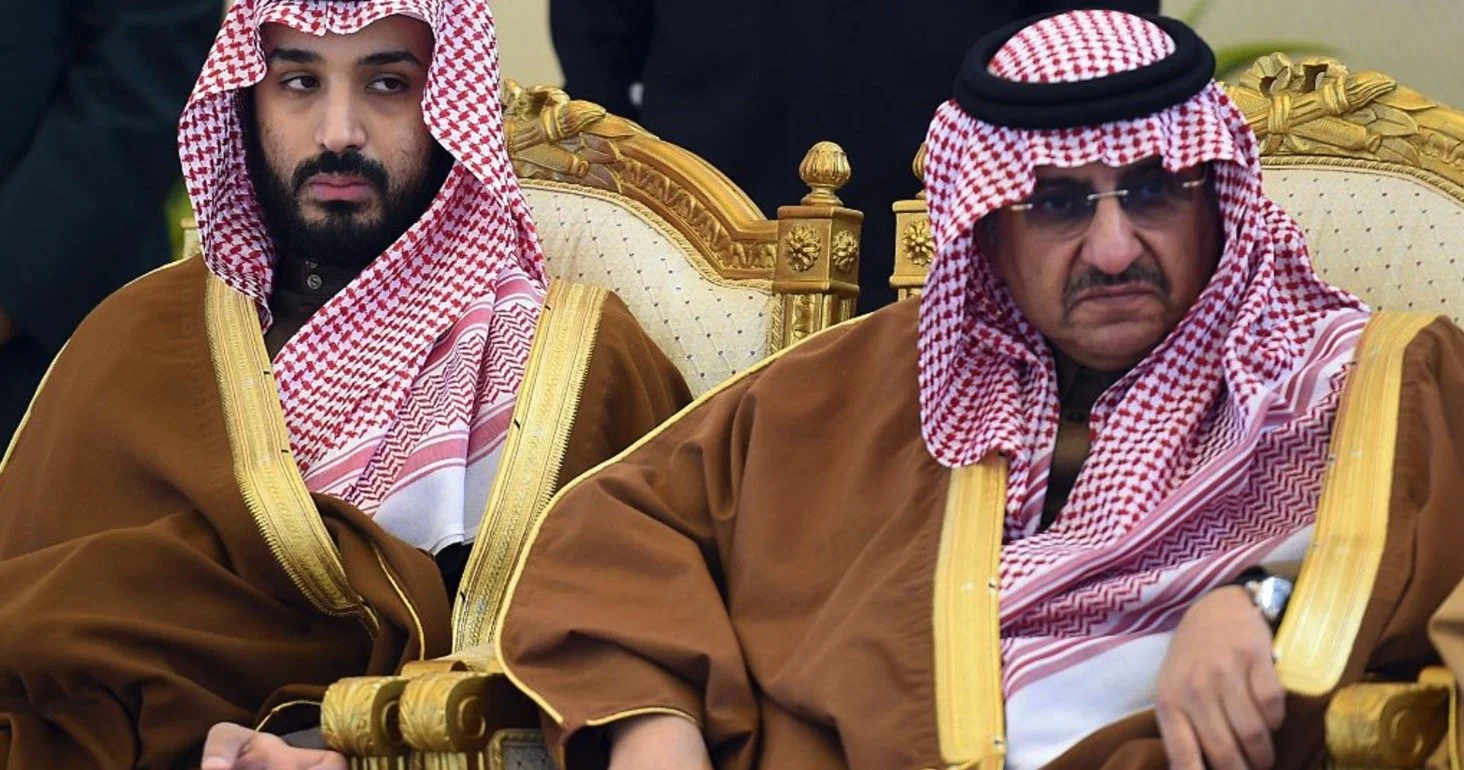
Watch your back. Crown prince Mohammed bin Nayef, right
The MBS coup was, in fact, a revolution – replacing an autocratic family model loosely based around the Islamic shura council system (steeped in Quranic principles of extensive consultation, after which the ruler decides what is best) with a genuinely absolutist one-man rule. MBS defied the traditionalists and made a major tilt away from the Kingdom's fundamentalist Wahhabi Islam towards a Mar-a-Lago-style Westernism.
Hearing all this brought to mind Henry Bolingbroke (King Henry IV of England), who, a bit like MBS, led a successful coup and seized the crown back in 1399. History records that within a few years Henry triumphantly entered York at the head of a cavalcade after repressing resistance to his reign; the heads of many of his enemies (and some recent allies) dancing on pikes behind him. He was, an historian recorded, the picture of happiness that day.
Jump forward a couple more years and Shakespeare gives voice to a much-changed king in the opening words of Henry IV Part I:
So shaken as we are, so wan with care
Find we a time for frighted peace to pant
And breathe short-winded accents of new broils
To be commenced in strands afar remote.
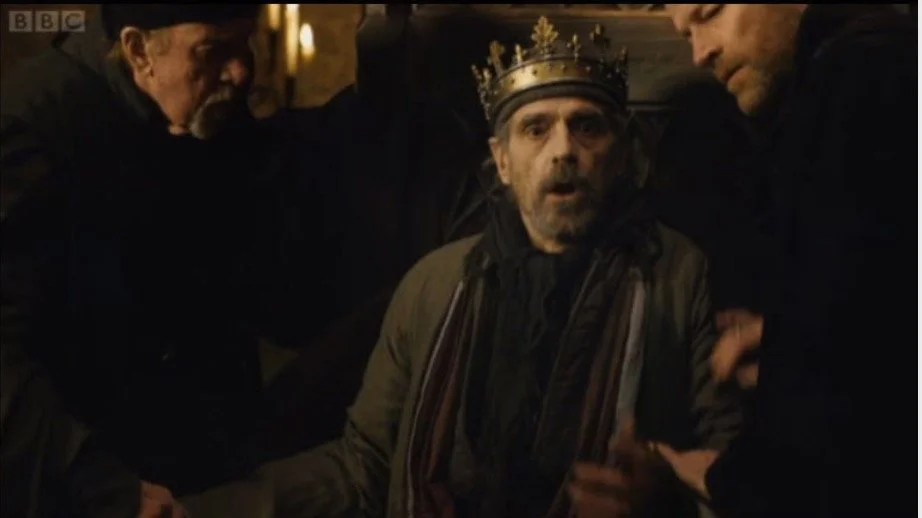
Jeremy Irons as Henry IV in the BBC series The Hollow Crown. BBC
In other words, within the space of a couple of years, the cocky young man who won the crown had been reduced to a panting nervous wreck with daily news of perils closing in on him while he dreams of war in the Holy Land/Middle East.
“Uneasy lies the head that wears a crown,” he reflects to himself in a sleep-deprived midnight wander through the palace. The historian Holinshed also noted that after a few years in the top job even his face had been chewed away by some disfiguring disease – a facial metaphor for the state of his kingdom. Now something is equally rotten in the Saudi state.
Shakespeare was obsessed – as we all should be – with the dangers of political instability and civil strife; he clearly loathed rulers who, like Lear, Macbeth and Henry Bolingbroke, plunged their kingdoms into chaos, and who lacked restraint and concern for their people’s wellbeing.
The Western empire and its vassal states like Israel are governed by such men. My life has seen Western leaders attack country after country, year after year, killing millions after millions, in strands afar remote, while not giving a damn for the wellbeing and social cohesion of their own people.
The first way a ruler derives legitimacy is through providing security and stability. MBS has defied this principle from the first day he wreaked hell and fury on the poor of Yemen in 2015, to his dismemberment of his countryman, the Washington Post journalist Jamal Khashoggi, to his ill-considered investments, and perhaps most fatally, his decision or at least acquiescence as a vassal, to provide the airspace, airports and even free jet fuel for Trump’s war on Iran.
As the damage to their critical infrastructure piles up – the deadly attacks on King Khalid International Airport, the major damage not just to the East-West pipeline and the Yanbu facilities on the Red Sea but major oil and gas fields in the Eastern Province next to UAE – the Saudis unbelievably seem to be running into money problems.
The word in corners of the markets is that the US has told the Saudis they can’t cash in too many bonds and other US-held assets in case it spooks the horses on Wall Street thereby driving interest rates deeper into the danger zone. If true, this will add to his woes, to his sleepless nights and worried backwards glances.
How should I end this article? Three quotes jostle for the honour (Shakespeare’s plays have been a long-term interest of mine). From my options, you’ll deduce I’m a fan of neither kings nor emperors who launch wars of aggression. Henry IV on his deathbed:
“God knows, my son,
By what by-paths and indirect crook’d ways
I met this crown, and I myself know well
How troublesome it sat upon my head.”
Or, one about Macbeth, a salutary tale of a man who sought power for its own sake without an ennobling cause and realises that enemies are gathering around him:
“Now does he feel his title
Hang loose about him, like a giant’s robe
Upon a dwarfish thief.”
Trump in Iran, Netanyahu with the Israeli genocide, or MBS in Yemen, could all utter these words of a desperate Macbeth, trapped by his own actions, bereft of a viable plan:
“I am in blood
Stepp’d in so far that, should I wade no more,
Returning were as tedious as go o’er. “
You choose.
Eugene Doyle
Eugene Doyle is a writer based in Wellington, New Zealand. He has written extensively on the Middle East, as well as peace and security issues in the Asia Pacific region. He hosts solidarity.co.nz.
This article may be reproduced without permission but with suitable attribution.