
Serbia’s President Aleksandar Vučić, widely regarded as the ruler of one of the most corrupt states in Europe was swept from office this month by a peaceful, student-led revolution at the ballot box. It is the latest in a series of seismic events shaking the old order in Europe today. On the night of the elections, 25 October, masked and armed men, along with truckloads of military and riot police had spread out in front of the Republic Electoral Commission and other key buildings in Belgrade. What happened next stunned everyone.
At 9.20pm the electoral commission reported that Vučić’s party had a comfortable lead. Party officials and the country’s media – heavily state-controlled – repeated the report. Would the elections be stolen? Would the forces of the deep state, so powerful in Serbia, unleash violence and attempt a crackdown on the students and their millions of supporters? Then a jaw-dropping volte-face: minutes later Vučić himself declared that it was, in fact, Studentska lista – the Student List – which had captured an impressive majority of seats in the Narodna skupština, the national parliament. Vučić was facing the reality that the population had voted in their millions to end his 14 years of mis-rule.
I spoke with my friend Dr. Stevan Rapaić, a senior research associate at the Institute for Political Studies in Belgrade about this watershed moment for his country. What triggered Vučić’s concession after it at first seemed “a fix” was in progress?
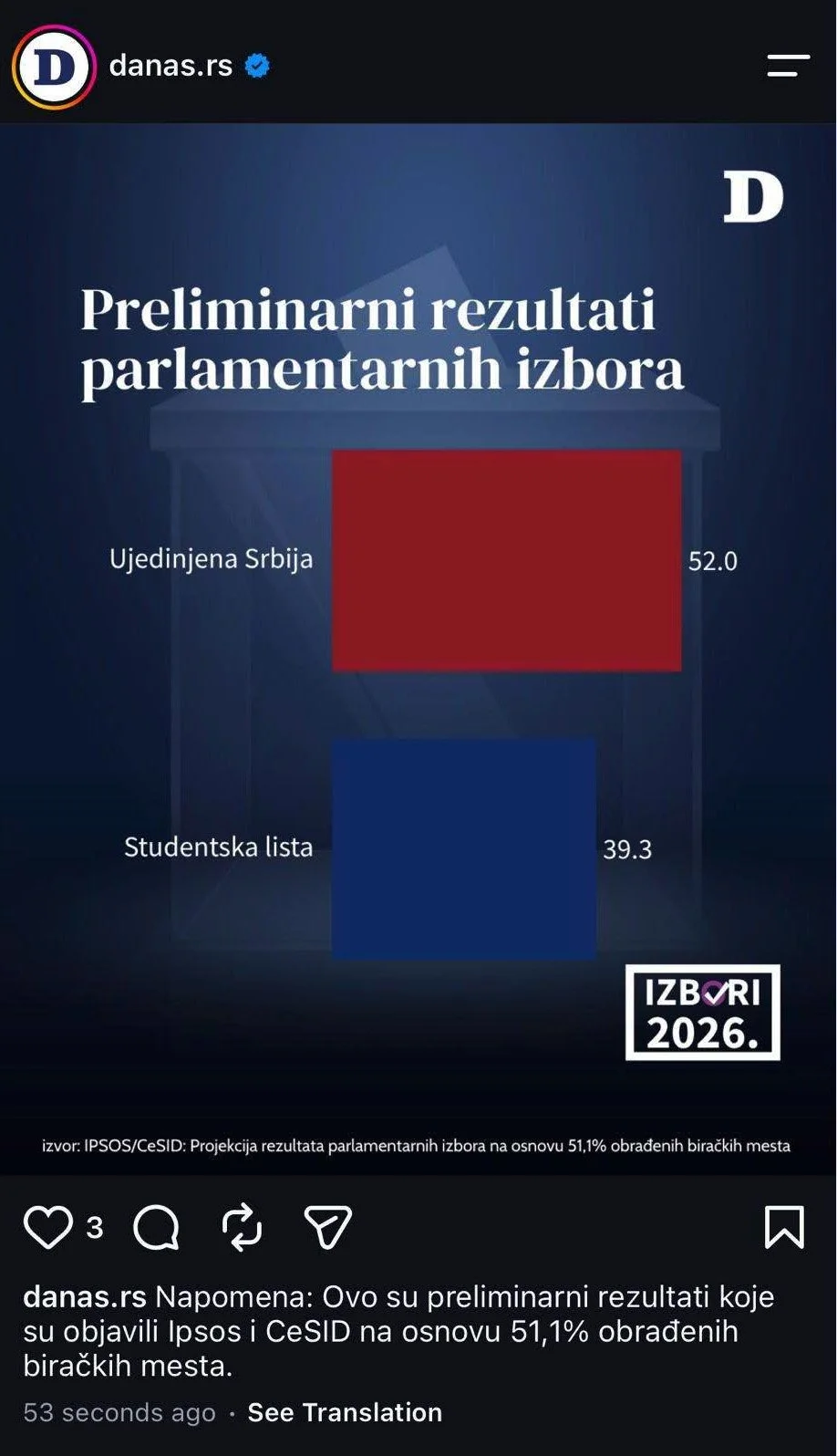
Within minutes of this preliminary result showing the ruling party had a commanding lead, Vučić had conceded defeat.
“This is Belgrade – a crossroads, a hub for secret services from all over Europe. Everybody is saying that he got a phone call from somebody very important. Was it from Berlin? From Washington or Paris? I cannot say with certainty but the people are saying the same deal was made as with the president of Montenegro a couple years ago: ‘You stand down, no bloodshed, and we'll guarantee the safety of you and your family – and you're not going to be prosecuted’,” Rapaić says.
For the moment, the country is in a state of euphoria. When the real voting numbers were declared, Student List, a start-up political movement led by university students and without even a leader, had captured 141 of the 250 seats. No leader? That’s odd. Dr Rapaić says it was a brilliant strategy.
“The Student movement knew if they put one person as their leader, there is a big chance all kinds of bad things could happen to them. First of all, he would be destroyed through the media – even the private media was governed by the regime.”
As Filip Milačić pointed out in a recent Pearls & Irritations article: “The students’ victory was the culmination of months of protests that began in November 2024, when a canopy at the Novi Sad railway station collapsed, killing 16 people. With the government doing little to punish those responsible, the public outcry continued to build, and popular mobilisation paved the way to change through the ballot box.”
The Student List fielded candidates who were mainly their most respected professors, chosen for their combination of integrity and expertise.
“There were 250 candidates on the list, completely unrotten apples, and the regime could not find anything on them,” Rapaić says.
The fact that the List is made up of people from different political persuasions – left, right, pro-EU, pro Russia and China, and so on – reflects what the core demand is: the creation of a state that is governed by universal principles of justice and the rule of law, and not ruled by political and economic grifters.
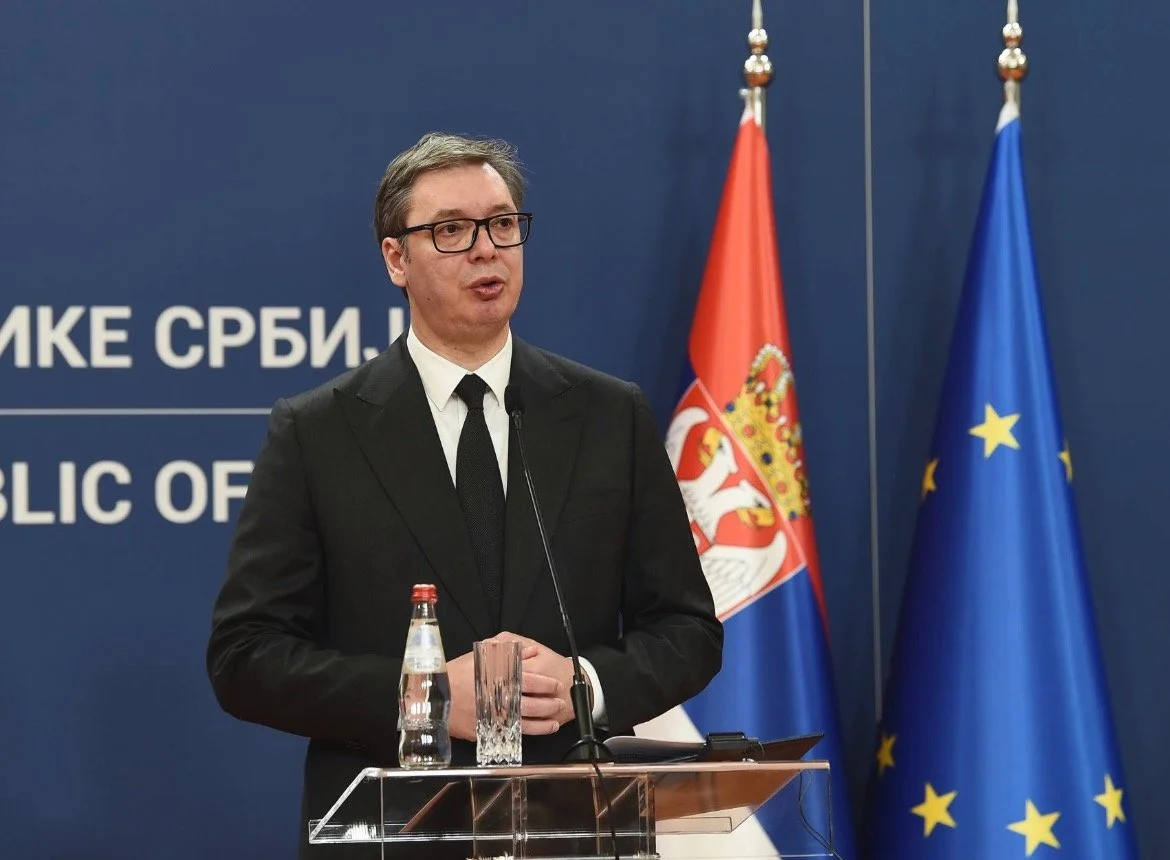
On the surface that diversity seems problematic but before you can have contested democratic politics a political revolution was necessary and that required a united front.
Serbia is just one of the countries in the Balkans that has suffered from the capturing of the state to serve narrow interests. Professor Florian Bieber of the University of Graz, Austria wrote in “Patterns of competitive authoritarianism in the Western Balkans” that the governments that emerged post-2000 both differed and had similarities to the regimes that dominated the region in the 1990s – those of Serbia’s Slobodan Milošević, Croatia’s Franjo Tuđman and others.
“These new regimes draw on the failure of reformist governments during the early 2000s to decisively break with authoritarian practices and establish independent and democratic institutions, thus facilitating the return of competitive authoritarian regimes,” Florian Bieber said.
Two glaring challenges lie ahead if the stunning victory is to be translated into genuine reform for the long-suffering Serbian population: the rapid creation of a functioning government and with it democratic control of state institutions. High on the agenda is also press freedom.
“Serbia became so corrupt. This regime was in power for 14 years and criminalized structures are everywhere. So it's going to take a lot of time and a lot of effort for institutions to do the work they are actually paid for and to actually work for the people,” Rapaić says.
There will be all sorts of forces inside Serbia and also externally who will want to shape what happens next. The Russians, British, French, US and German intelligence services, the Vučić forces, the Serbian deep state, criminal networks, business and civil society organisations, all sorts of elements will try to secure influence.
“We are hungry for justice,” Dr Rapaić says. “We hope for a non-violent purge because for so many years there was injustice everywhere in Serbia. People in Serbia feel a sense of optimism, but we're not stupid. We know that this can go both ways. This is a perfect opportunity for consolidation of democracy, to consolidate a legal state where the institutions work, where prosecutors to do their job, where the police do their job, and so on. It was hijacked. All these institutions were hijacked by a small group of people for so many years that controlled everything.”
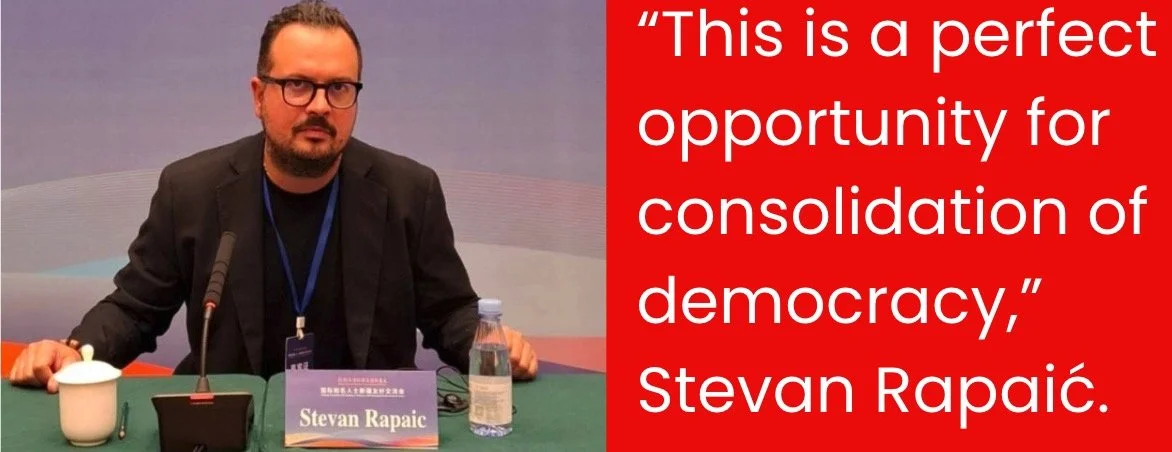
But for today, Dr Stevan Rapaić and millions of Serbians are enjoying a rare moment of optimism.
“Until now they were all listening to only one man: President Vučić. He was the one, and his word was the word that controlled everything in Serbia. That ‘word’ right now has no political power, and they know it. It was the same when Milošević was in power. Now the Vučić system is crashing down like a house of cards.”
Rapaić and others point the finger at the EU as one of the sources of Serbia’s misery. The EU is seen by many Serbians to have tolerated criminality, state capture and democratic backsliding within the country in effective exchange for Vučić’s regime contributing to regional stability and giving in, time and again, on the gaping wound that is the Kosovo question.
“I'm only 43,” Rapaić says, “but through my years there have been wars, a lot of turbulence, corruption, and now a second revolution. After everything that we've been through in Serbia we still can be – we have to be – optimistic.”
Eugene Doyle
Eugene Doyle is a writer based in Wellington, New Zealand. He has written extensively on the Middle East, as well as peace and security issues in the Asia Pacific region. He hosts solidarity.co.nz.
This article may be reproduced without permission but with suitable attribution.