Strategic blunderfest: the humiliating reason sanctions on North Korea have failed to achieve anything other than kill civilians.
I have been shocked by the reaction when I raise the lethal human cost of sanctions against North Korea with political figures I know. They tend to come back with a vociferous attack on the government in Pyongyang and its leader Kim Jong Un. Not liking, even hating, a government is not the point. We get closer to a valid argument when we focus on the stated aim of sanctions: to get North Korea to abandon its nuclear weapons and ballistic missile programme. Has the West deployed the appropriate ends, ways and means to achieve this goal?

A very short but brilliant lesson in strategy
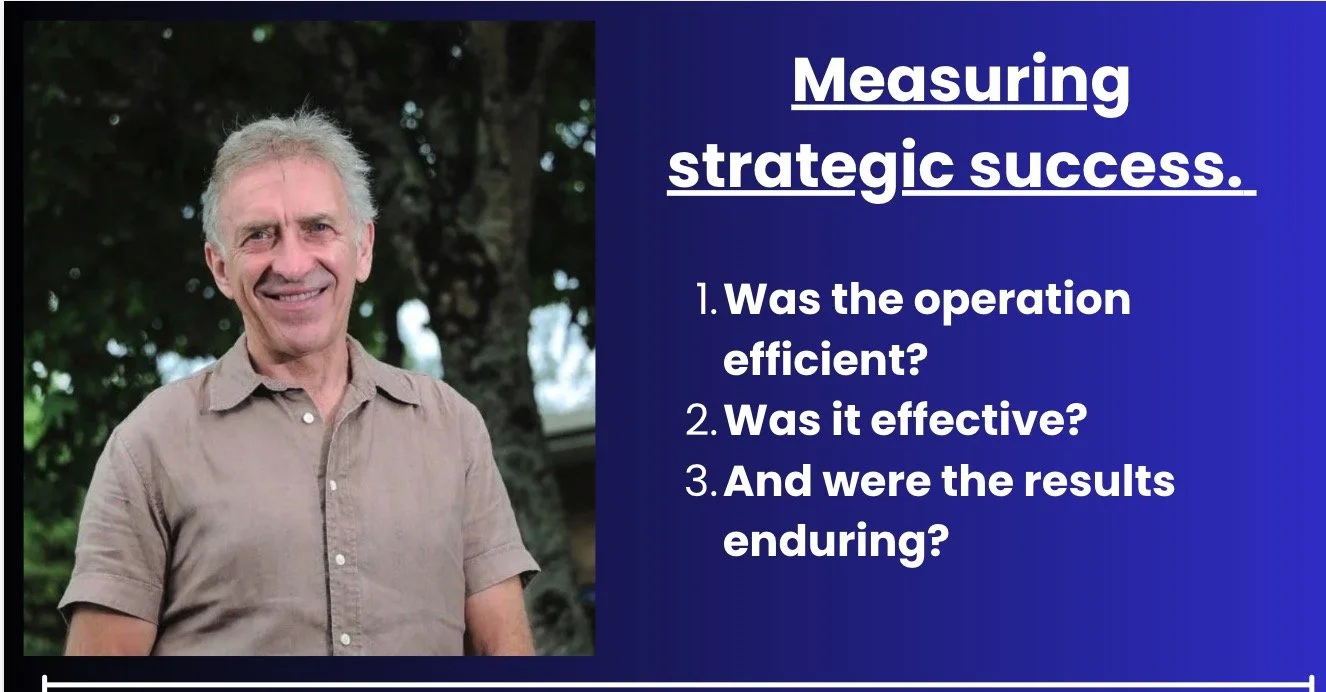
I recently listened to former UK diplomat Ian Proud interview Commodore (ret) Steve Jermy on The Peacemongers. Jermy, who saw combat in various theatres of war, including the Falklands, commanded naval squadrons, commanded the UK’s Fleet Air Arm, and is undoubtedly a master strategist, pointed out the abysmal performance of the West in recent years.
“We've seen failed interventions in Afghanistan, Iraq, Libya, Syria and now the Russia-Ukraine war,” Jermy says. Foremost, what failed was the ability to think strategically and that prompted him to write Strategy for Action: Using Force Wisely in the 21st Century.
“The evidence of effective strategic thinking is that operations are successful,” Commodore Jermy said. “And I use the test of Effectiveness, Efficiency and Enduring. Was the operation efficient? Was it effective? And were the results enduring? If you look back at Afghanistan, Iraq … I could go on … there's no evidence whatsoever of any success. Indeed, the reverse.”
“If we had got the strategic thinking right in many of these operations, we would not have done the operation in the first place!“
Let us extend that framework of strategic success – Effectiveness, Efficiency and Enduring – to the sanctions campaign to stop North Korea’s nuclear and ballistic missile programme.
If the West applied these simple tools of analysis it would abandon its current approach to international relations.
EFFECTIVE
Did the operation achieve its stated strategic objective? Did sanctions stop or reverse the nuclear and ballistic missile weapons program? Did they compel denuclearization? Did they change the regime's behavior in the intended direction?
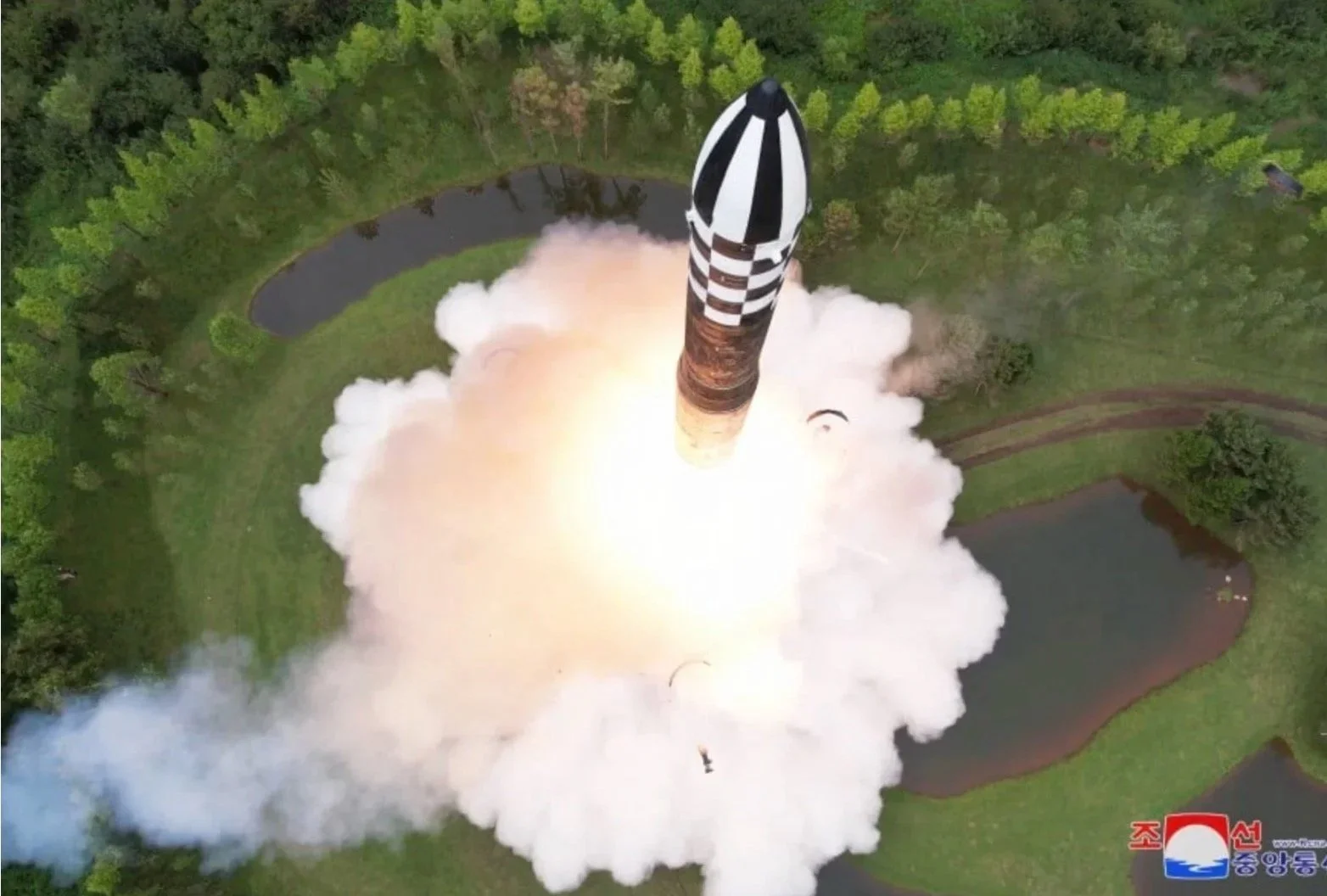
The factual record: No. According to Western intelligence estimates, North Korea now has approximately 50 nuclear warheads, with fissile material for up to 90. They've developed solid-fuel ICBMs, including the Hwasong-20, capable of striking the US mainland. The objective was denuclearization; the result is a far more capable nuclear power. It shouldn’t need pointing out but North Korea – love them or hate them – has zero intention of striking the US unless attacked. Their weapons programme is designed to achieve deterrence. The sanctions accelerated this.



EFFICIENT
Did the operation achieve its aims with optimum cost/resources relative to the outcome?
The sanctions required a massive international enforcement apparatus – eleven countries deploying naval vessels and surveillance aircraft, an Enforcement Coordination Cell (aboard USS Blue Ridge) coordinating operations across multiple seas, decades of diplomatic effort at the UN, and untold billions in monitoring and compliance costs. Against this investment, North Korea not only maintained but dramatically expanded its nuclear program. Meanwhile, the humanitarian cost has been catastrophic. The sanctions achieved the opposite of their stated goal at enormous cost to both innocent civilians and to the nations enforcing them.
ENDURING
Did the operation produce lasting, stable results that don't require continuous intervention? Did sanctions create a permanent solution, or do they require indefinite enforcement? Have they created lasting peace/stability, or ongoing tension? Have they resolved the underlying security dynamics, or perpetuated them?


Clearly, the enduring effect is a state of intense hostility. Both sides conduct endless war games, trust is at zero and the mechanism for diplomacy has been largely destroyed. We are further from a lasting solution than when sanctions began.
Non-Proliferation requires nuclear powers to respect non-nuclear powers
So, it is clear that, in respect to curtailing the North’s nuclear weapons programme, UNSC 2397 and other measures have failed miserably. As geopolitical realists like John Mearsheimer point out: when faced with existential threats states will sacrifice anything to achieve deterrence. Now they have the nukes, the North has stated it wants to grow the economy and improve the livelihood of its population. That is the last thing the US wants (see the Cuba, Venezuela, Iran playbooks on destroying economies and harming civilians).
Despite the colourful rhetoric and aggressive posture of their leaders, the reality is that North Korea has had its back to the wall for generations, hemmed in by a more powerful South which has had US nuclear weapons stationed on its territory. These were apparently removed in the 1990s but the waters off North Korea bristle with US nuclear submarines and ships. At any one time about 20 US nuclear submarines are prowling in the deep waters of the Yellow Sea, Sea of Japan and the South China Sea. Each can carry missiles the equivalent of over 1,000 Hiroshima bombs - truly apocalyptic. Would you trust Donald Trump to behave responsibly?
The Non-Proliferation of Nuclear Weapons Treaty (1970) is potentially excellent and to be encouraged. The first essential of such a programme, however, is for nuclear powers (US, Russia, UK, France, China, Israel) to respect the territorial integrity, the sovereign rights of non-nuclear powers. We do not live in such a world.
The Western stranglehold is weakening
Thankfully for millions of North Korean civilians (please read my last article on the human cost of the sanctions), the US grip on North Korea is slowly weakening. The war in Ukraine, terrible as it is, has provided a powerful engine for Russia and North Korea to cooperate. There has been a major increase in 2-way freight, for example, North Korean artillery shells in one direction, and fuel and food from Russia in the other.
This has come about through a masterclass in Strategy by Dummies delivered by the Trump and Biden administrations. As I pointed out in “The infantilisation of Western Grand Strategy” last year:
“Geopolitical thinker Zbigniew Brzeziński, national security advisor to Jimmy Carter, said an even bigger threat to US dominance than a rapprochement between Moscow and Beijing was if Russia, China and, heaven help, Iran formed an alliance.” Not only have they achieved just this but, for good measure, have moved the Russians and Chinese out of supporting UNSC 2397 directed at North Korea.
Why did the Russians and Chinese vote for it in the first place? “It was still in the time of our illusions,” a Russian commentator told me, meaning that they still felt the West could be encouraged to behave reasonably.
In March 2024, Russia vetoed a UN resolution to renew the mandate for the Panel of Experts (PoE) that assists the Sanctions Committee. With the collapse of one of the key mechanisms for enforcement, and Russian, and increasingly Chinese, refusal to comply with a starvation siege of the North, further enforcement by the US, Australia, New Zealand and others reinforces the impression that this is an inhuman assault that will achieve no meaningful outcomes; it only immiserates millions of guiltless civilians. Why are we ceding the moral high ground to the Russians and Chinese?
The US has already killed millions of North Koreans. Shouldn’t we stop now?
Most people I speak to are completely unaware of the fact that the US, trading under the nom de guerre ‘The United Nations Command’, killed millions of civilians in a revenge aerial bombing campaign as punishment for getting trounced by the Chinese in 1950. General MacArthur, ignoring Chou En Lai’s warning, sent 150,000 troops deep into the North in 1950. They were routed and driven back behind the 38th Parallel at great loss of life. Countries like Australia and New Zealand celebrate their involvement in this war. As I pointed out a couple of years ago in an article ‘Gaza happened because we forgot Korea’:
“North Korea is 120,538 km² - about the same size as England or Greece. And yet the scale of destruction was proportionally identical to Gaza. Nearly every city, town and village in that country of 11 million people was totally destroyed.” The slaughter in the bombardment and consequential deaths was about 3 million civilians. It achieved nothing.
So here we are 75 years later, still attacking North Korea in yet another of the West’s dark, mad forever wars. Isn’t it time we consulted our moral compass and set a course correction? Isn't it time we killed the sanctions, not the civilians?
Eugene Doyle
Eugene Doyle is a writer based in Wellington. He has written extensively on European geopolitics, Middle East, and peace and security issues in the Asia Pacific region. He hosts the public policy platform solidarity.co.nz.
This article may be reproduced without permission but with suitable attribution.