Saudi Arabia’s “Nordstream” pipeline is waiting to be hit.
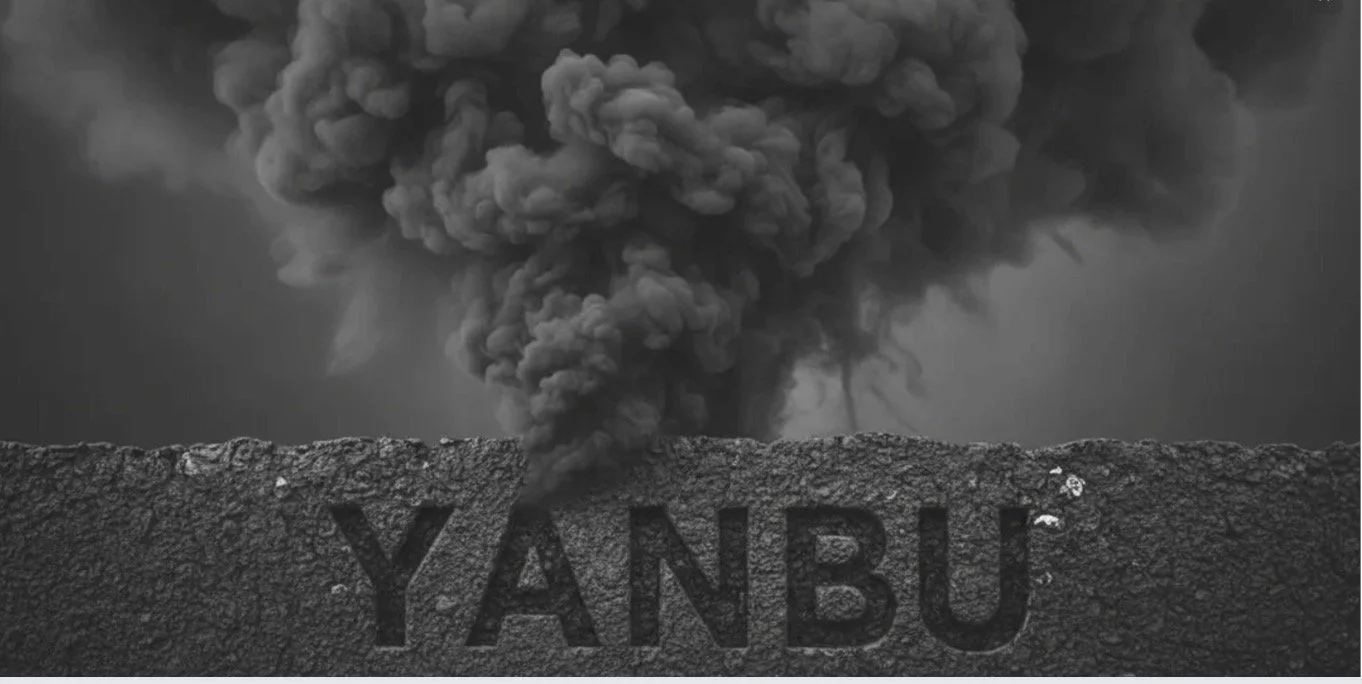
If the US-Israelis escalate, the Saudis should fear for the future of the Yanbu pipeline. So should we – even if you don’t know it by name. If Trump and Netanyahu make good on their genocidal threats against Iran and escalate, “Yanbu" may soon be as familiar to you as “Hormuz”. Yanbu alone is delivering about 7% of global seaborne crude. Iran is fully aware that, by by-passing the Strait of Hormuz, it provides the West with access to millions of barrels of oil per day needed to keep industries and lives moving forward and oil prices from skyrocketing. Why, Iran might reasonably ask, should this continue while the US-Israeli war machine pursues its mission to drive Iran back to the Stone Age?
Yanbu bears resemblance to another famous pipeline – Nord Stream – that, as forewarned by President Biden, was destroyed after the Russian invasion of Ukraine in 2022.
“If Russia invades – that means tanks or troops crossing the border of Ukraine – then there will no longer be a Nord Stream 2. We will bring it to an end,” the President said at a press conference in February 2022. It wasn’t a smoking gun but rather watching someone load the gun.
Today, in a different US war, Nord Stream’s destruction could easily invite emulation by the Iranians who are slowly learning to better the instruction provided by the US and Israel.
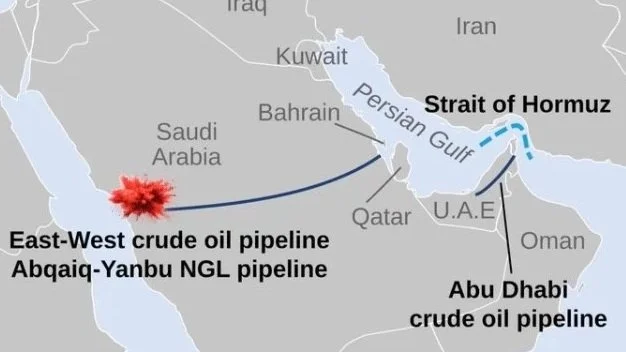
Sitting out on the Red Sea, seemingly far from the trouble and strife playing out in the Persian Gulf, is Yanbu, the port that receives up to 5 million barrels of Saudi oil per day. It is a lifeline for Saudi Arabia’s oil industry, an escape route for oil that would otherwise be trapped. If the Strait of Hormuz is the jugular vein of Gulf oil, Yanbu is a by-pass valve allowing the Saudi energy heart to keep beating.
Built during the Iran-Iraq War in the 1980s, this 1,200 km pipeline connects the massive Abqaiq oil fields in the Eastern Province of Saudi Arabia with the Red Sea. It was built with the express purpose of bypassing the Strait of Hormuz. Known as the East-West Pipeline or simply The Petroline, it travels 1,200km across the Kingdom over some of the harshest deserts in the world, a glistening steel thread that even traverses the jagged Hijaz Mountains, to reach its terminus at the Red Sea port of Yanbu.
Yanbu isn’t just a port, it is a sprawling facility with the complex engineering needed to receive, store and shuttle the black gold. Huge storage farms glistening with steel tanks, each holding tens of millions of barrels, connect with dozens of specialised berths for the giant tankers. The biggest tankers can swallow 270,000 tonnes of oil that must then work its way either north through the Suez Canal or south through the chokepoint at Bab el-Mandeb, which both Ansar Allah (the Houthis) and Iran have threatened to close this week.
Bab-el-Mandeb means – most aptly today – “Gate of Tears” or “Gate of Grief” in Arabic. Saudi Arabia, UK, US and to a lesser extent New Zealand, Australia and many Western countries, have been part of a campaign to crush Houthi control of this 20km chokepoint. The Saudi-led war and starvation siege imposed on Yemen with the assistance of these countries killed, according to the United Nations, over 400,000 Yemeni civilians. This depraved violence against one of the poorest populations on earth was largely ignored by the Western media. It features heavily in the calculations of Iran and Yemen: they know the moral values of their enemies.
So far the Houthis have only participated in a limited way with a few, largely symbolic, missiles fired at Israel. They have good reason to hesitate. The Saudis, battered by Houthi drone strikes on their infrastructure and out-generalled by Ansar Allah, have signalled a willingness to permanently settle the Yemen war, providing territorial concessions and huge funds for reconstruction. Blocking the Bab-el-Mandeb could wreck this strategic progress and invite another genocidal onslaught from the Saudis, Americans and their allies.
Nonetheless despite being massively out-gunned, Ansar Allah and the Yemeni people in their millions have shown a willingness to confront what they see as the Axis of Genocide (US-Israel and their allies). Just a few days ago Houthi Deputy Information Minister Mohammed Mansour told Al Monitor, “The option of closing the Bab el-Mandeb Strait is a Yemeni option that can be implemented should the aggression against Iran and Lebanon escalate savagely, or if any Gulf state becomes directly involved in military operations in support of the [Zionist] entity or the United States.”
For its part, Iran has a menu of options to choose from to bring the flow into or out of Yanbu to a halt. Something as simple as destroying the specialized loading arms or the pumping stations at the terminal would halt the whole system. Striking a handful of tankers (some with $200 million of oil onboard) would instantly make the Red Sea uninsurable. The pipeline itself could be targeted. This is the fire and mayhem that the US and Israel are inviting if they continue to target Iran’s civilians and vital infrastructure.
As geopolitical experts like John Mearsheimer have warned for decades: when faced with an existential threat (as Iran obviously is) a state will do anything to ensure survival. Were Iran to successfully see off the massive attack by the US and Israel and successfully retain control of the Strait of Hormuz, it will seek to establish an entirely new security architecture for the region, one that no longer involves US bases. Iran will want peace, stability and good commerce, but will seek reparations from the Gulf States for having provided bases for the US-Israeli war machine.
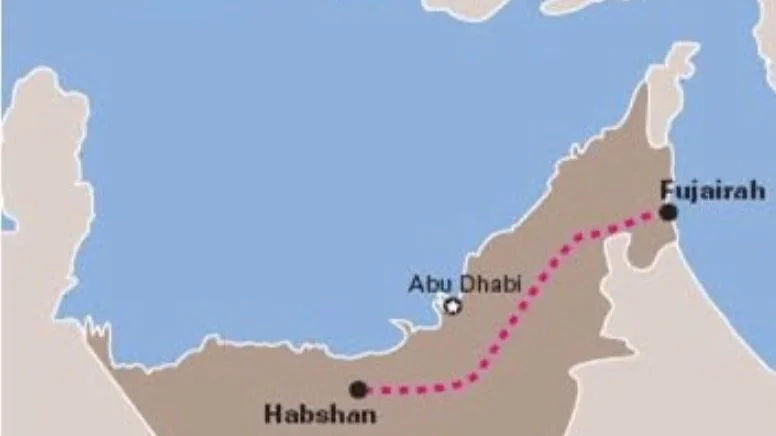
Another pipeline will also likely be on Iran’s list of potential targets. Israel’s close ally Abu Dhabi, has played an important role in the war. It is the richest of the emirates that comprise the UAE. Its Habshan–Fujairah pipeline also bypasses Hormuz by taking a 360km land route from Abu Dhabi’s Habshan oil wells to Fujairah, a port on the Gulf of Oman. This adds about 1.8 million barrels a day to global trade and currently sits outside Iranian control.
With Iran in the process of establishing a toll booth – a system of transit charges – for vessels passing through the Strait of Hormuz, both Habshan–Fujairah and Yanbu represent strategic threats to its control of energy coming out of the Gulf and, most importantly, the taxation revenue scheme it will need to recoup the hundreds of billions of dollars in damages to the country inflicted by the US and Israel. I discuss this topic in my article Who will pay billions in reparations to Iran? We will.
I hope this violence ends. I hope the Americans and Israelis cease their illegal war. I doubt either will pay reparations to the Iranians, including the families of the hundreds of school children they have slaughtered. For those reasons and more, I hope the Iranians survive and thrive thanks, in part, to the transit fees they now have every right to charge the nations that did nothing to stop this crime of crimes.
Eugene Doyle
Eugene Doyle is a writer based in Wellington, New Zealand. He has written extensively on the Middle East, as well as peace and security issues in the Asia Pacific region. He hosts solidarity.co.nz.
This article may be reproduced without permission but with suitable attribution.