Iran’s target list: taking the war to Western multinationals.
Rightly or wrongly, America’s biggest companies are now on the front line of Iran’s drone and missile war. Trump’s 48-hour deadline may have passed without Armageddon on the region’s energy infrastructure but billions of dollars worth of assets and the lives of millions of people who depend on them are still imperilled. If Iran can stay in the fight, the biggest multinational corporations in the West may be heavily targetted thanks to Donald Trump and Benjamin Netanyahu. Are these major Western companies innocents victims or legitimate targets?

Microsoft, Palantir, Oracle, Siemens, Goldman Sachs, Dow Chemicals and many more will provide Iran with an orchard of low-hanging fruit worth hundreds of billions of dollars.
ExxonMobil and Shell have already lost billions. The precision strike on the Ras Laffan LNG trains on March 19 will end up costing them and the Qataris about $20 billion in infrastructure and $100 billion in lost revenue to shareholders over the next five years. That destruction, as forewarned, came hot on the heels of an Israeli strike on Iran’s Pars gas field.
Amongst the first retaliatory strikes Iran launched as part of Operation True Promise IV were drone waves which hit Amazon data hubs in Bahrain and UAE.
The stakes couldn’t be higher. For Iran, the era of Strategic Patience is over. It knows it is locking horns with the greatest military power in history, the US-Israeli Empire. For the sake of all of us, the wisest course would be peace and a renewed commitment to the UN Charter. Sadly, that is unlikely to happen before much more wanton destruction.
Innocent businesses or legitimate targets?
As they sought to transform their economies, the oil-rich Gulf states pumped hundreds of billions of dollars into the pockets of "Big Tech”. These investments were in the process of delivering an enormous economic boon to the region. However, each of these tech giants also has contracts with the US Department of War and each is likely to be targeted because, as you’ll see below, they are all part of an increasingly digitised war machine arrayed against Iran.
Google operates the $10b Dammam A.I. Hub in Saudi Arabia and another in Qatar.
Along with Amazon, Google is the driver of Israel’s Project Nimbus, providing the Israeli military with AI tools for object tracking – for example intercepting traffic cameras in Tehran or Beirut, running facial recognition on travellers. When “targets” are identified, they are fed to command centres which launch missiles to assassinate military, political or cultural leaders, even journalists and doctors. How many dead Iranian politicians, nuclear scientists and generals met their doom thanks to being “googled” in this way is unknown.
Microsoft: A dominant provider of cloud services and AI infrastructure in the UAE and Saudi Arabia. It has huge campuses across the Gulf.
Microsoft Azure provided the "hyperscale" cloud backbone for Israel’s Unit 8200 which powers mass surveillance and targeting of Palestinians. Microsoft claims it has now blocked Unit 8200's access to certain Azure cloud and AI services. Maybe. The same systems will be at work in Iran today.
It has been claimed its technology was also used in the “Where’s Daddy?” programme throughout the Gaza genocide to provide the high-speed data analysis used to track thousands of individuals to their family homes before triggering automated missile strikes. Israel has a deliberate policy of targeting entire families. New Zealand, US, UK, Canada, and Australia all share intelligence via Five Eyes with Unit 8200.
Amazon has established massive data centres in the UAE and Bahrain to serve the broader Middle East. Three of them have already been struck by Iranian drones.
Amazon is the primary host for Israel’s Project Nimbus, storing massive surveillance datasets gathered from a vast number of sources, such as drone feeds and medical records, including biometrics. These are then used for AI-assisted "recommendation" systems used in lethal targeting. As a side note: we should recall Anthropic’s Claude was cited by officials as part of the Pentagon’s A.I. targeting programme which led to the slaughter of 165 school girls at Minab on the first day of the US-Israel war on Iran.
Oracle has invested heavily in data hubs in Saudi Arabia and throughout the UAE, pulling in enormous government and financial sector contracts.
Founder and Chairman Larry Ellison is the largest private donor to the Israeli Defence Force and a major investor in the Israeli economy. Benjamin Netanyahu is known to vacation on Ellison’s private island in Hawaii. Oracle is one of only four companies cleared to store the Pentagon's most sensitive war-fighting data.
IBM: A key partner in the UAE's "D33" economic agenda and Saudi "Vision 2030" digital transformation. Various IBM facilities in the Gulf have been built for A.I. software labs, automated banking and business support.
IBM is also integral to the US SHIELD programme, a Pentagon/Missile Defense Agency contract designed to detect, track and intercept missiles and drones. IBM picks up an unspecified chunk of the total $151 billion for the SHIELD contract. IBM is also a tenant at CyberSpark, the office park attached to Ben-Gurion University in Beersheba, Israel, that houses Unit 8200 research facilities alongside Lockheed Martin and Oracle. After the US-Israeli attack on Iran in June 2025 Iranian missile strikes caused significant damage to the Beersheba campus.
You get the general picture: the major US firms are deeply integrated into the US-Israeli military industrial complex and – viewed through an Iranian lens – are legitimate targets.
With the tit-for-tat logic of this war, all the energy resources of West Asia are vulnerable to attack. The black toxic rain that Israel and the US unleashed on millions of civilians in Tehran when they bombed the city’s oil storage facilities this month can easily be replicated by Iran. I hope peace comes first. When it comes to engineering, logistics and consumer sectors, the Gulf and Israel are rich in large-scale “Smart City” projects, energy grids and massive power and water plants that all become targets should the US and Israel continue to target Iran’s vital infrastructure.
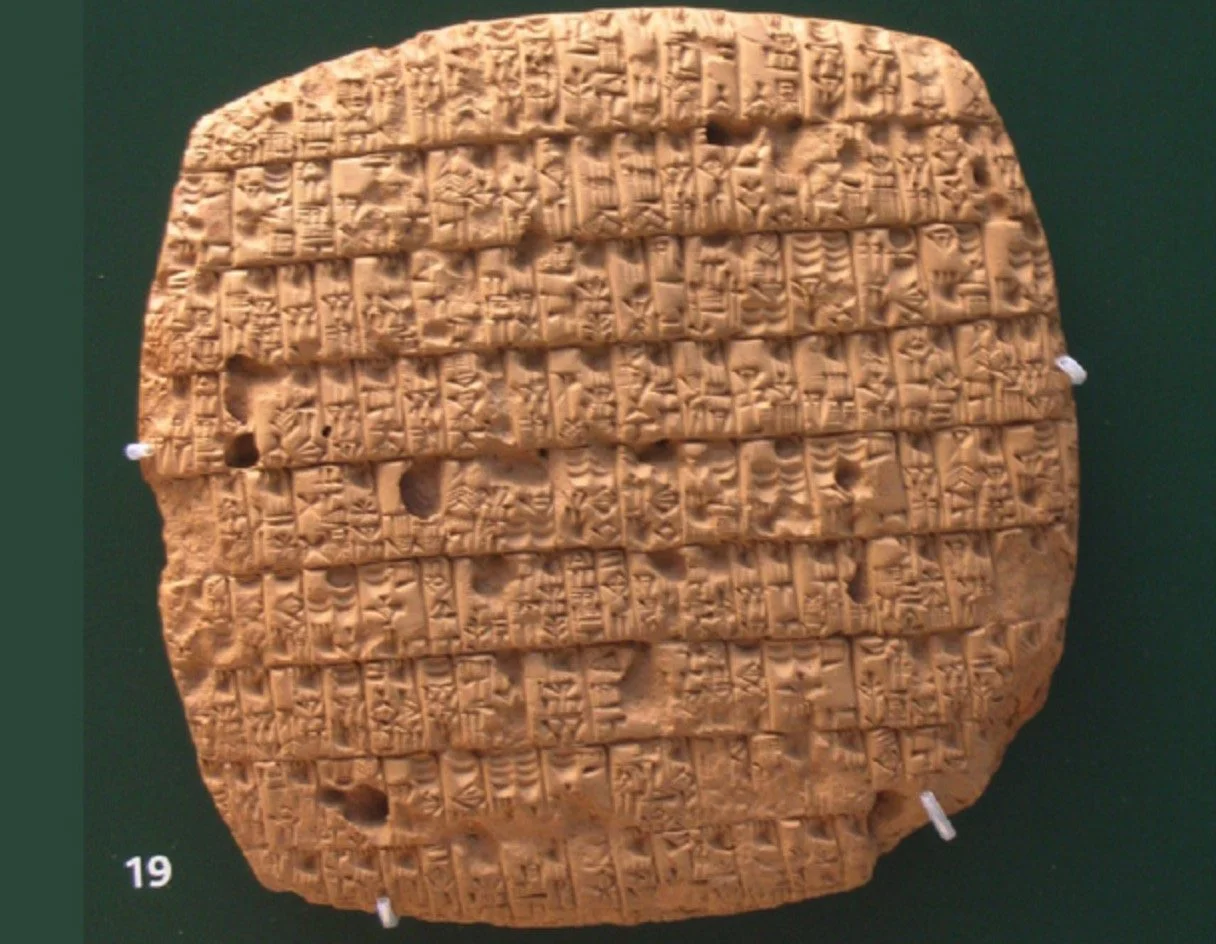
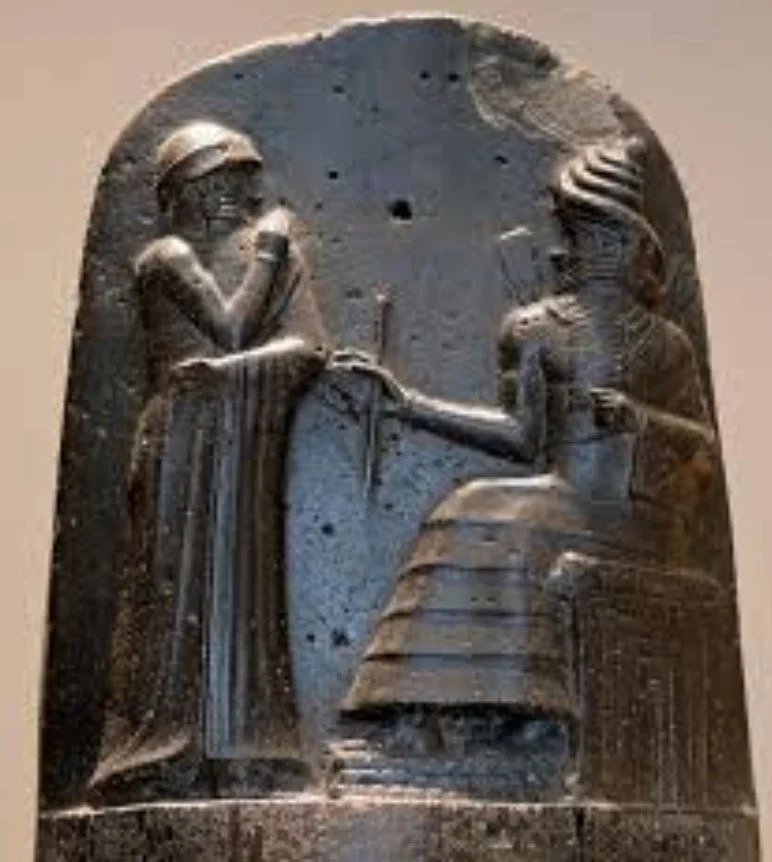
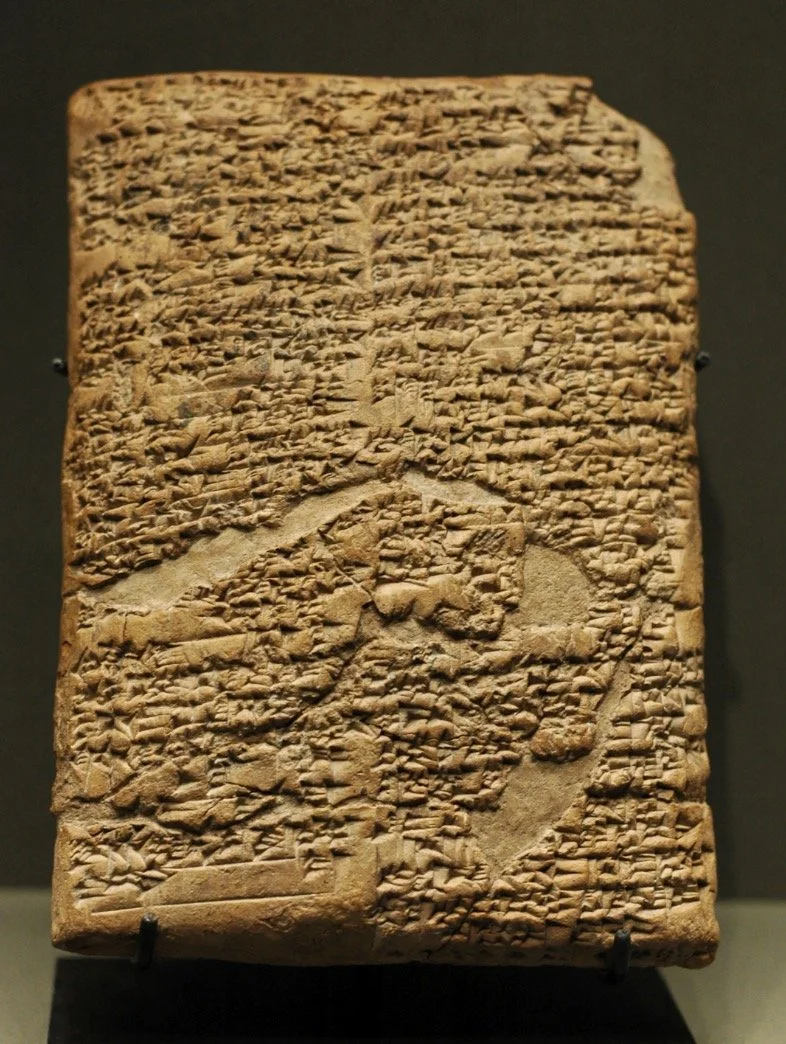
This is the cold, hard logic of an eye for an eye, a tooth for a tooth. In legal parlance this is lex talionis – the law of retaliation in kind. The concept is so old it pre-dates the Bible and all the texts of Judaism. Its oldest expression is in the Code of Hammurabi, the Babylonian legal code, dated circa 1754 BCE. “Bone for bone, eye for eye”. The Jews borrowed it and it appears in Exodus, Leviticus and Deuteronomy. The idea, however, is to be proportionate not disproportionate – the opposite to Israel’s Dahiya Doctrine or the US way of war.
The Code of Hammurabi caused an uproar in Europe and America when it was discovered in Susa, Iran, in 1902. In Iran, how appropriate. Amongst other things it laid out a code for just rulers.
Nobody doubts the far greater power of the US-Israeli empire. They are the strong; Iran is the weak. If we had better leaders in the West we would be trying to force the US-Israelis to stop their aggression against Iran and thereby help save the region from more destruction. We should be standing up for peace, respect for international law (proscription against wars of aggression and the targeting of civilians, non-interference in sovereign states, and so on).
I will give the last word to the Emperor Hammurabi of the Babylonian Empire who said that he laid down his Code "to prevent the strong from oppressing the weak, to see that justice is done to the orphan and the widow." The orphans and widows, the grieving mothers and fathers of Gaza, Lebanon and Iran would appreciate that.
Hammurabi also laid down a curse on rulers like Donald Trump and Benjamin Netanyahu who defied his Code, particularly the proscriptions on the improper use of force:
"May Ishtar, the goddess of fighting and war, curse his kingdom in her angry heart; in her great wrath, and change his grace into evil, and shatter his weapons on the place of fighting and war."
Eugene Doyle
Eugene Doyle is a writer based in Wellington, New Zealand. He has written extensively on the Middle East, as well as peace and security issues in the Asia Pacific region.
This article may be reproduced without permission but with suitable attribution.