Going for the jugular – the energy shock is coming
The Strait of Hormuz is the jugular vein of the world economic system. Iran has it in a chokehold and can put the knife across it any time it chooses. For the moment, the world is gripped by the incredibly destructive power that the US and Israel are unleashing on Iran. Despite the early “successes”, however, the prospect of the ongoing closure of the Strait is triggering panic attacks among the people who know what is likely to happen next: energy experts.
Photograph: Jonas Jordan. WikiCommons.
Several energy experts I follow have expressed amazement this week that the markets of US, Asia and Europe have not cratered at the prospect of Iran successfully maintaining an effective closure. My prediction: the current price spikes are just the beginning; an energy shock is coming and few of us are ready for its global, multi-faceted effects.
The US-Israeli war on Iran could “bring down the economies of the world” Saad al-Kaabi, Qatar’s energy minister warned this week. Few seem to be heeding him as markets remain stable. He told the Financial Times that all energy producers in the Gulf will have to shut down production within days and predicts oil will leap to $150 a barrel, up from $67 before the US launched its war of choice on Iran. Brent crude leapt to $87 within a week of the first missiles going in. As I write, another spike has brought it to over $100 a barrel.
Blockade, saturation, infrastructure destruction
All of us will suffer if the blockade of the Strait (Iran’s key weapon to stop the attack) leads to storage saturation, forced shut-downs and infrastructure destruction.
Oil is directly and indirectly a part of every product traded so we are weeks away from an inflationary spike in food, transport and other commodities that will transform this from geopolitical news to a kitchen table crisis.
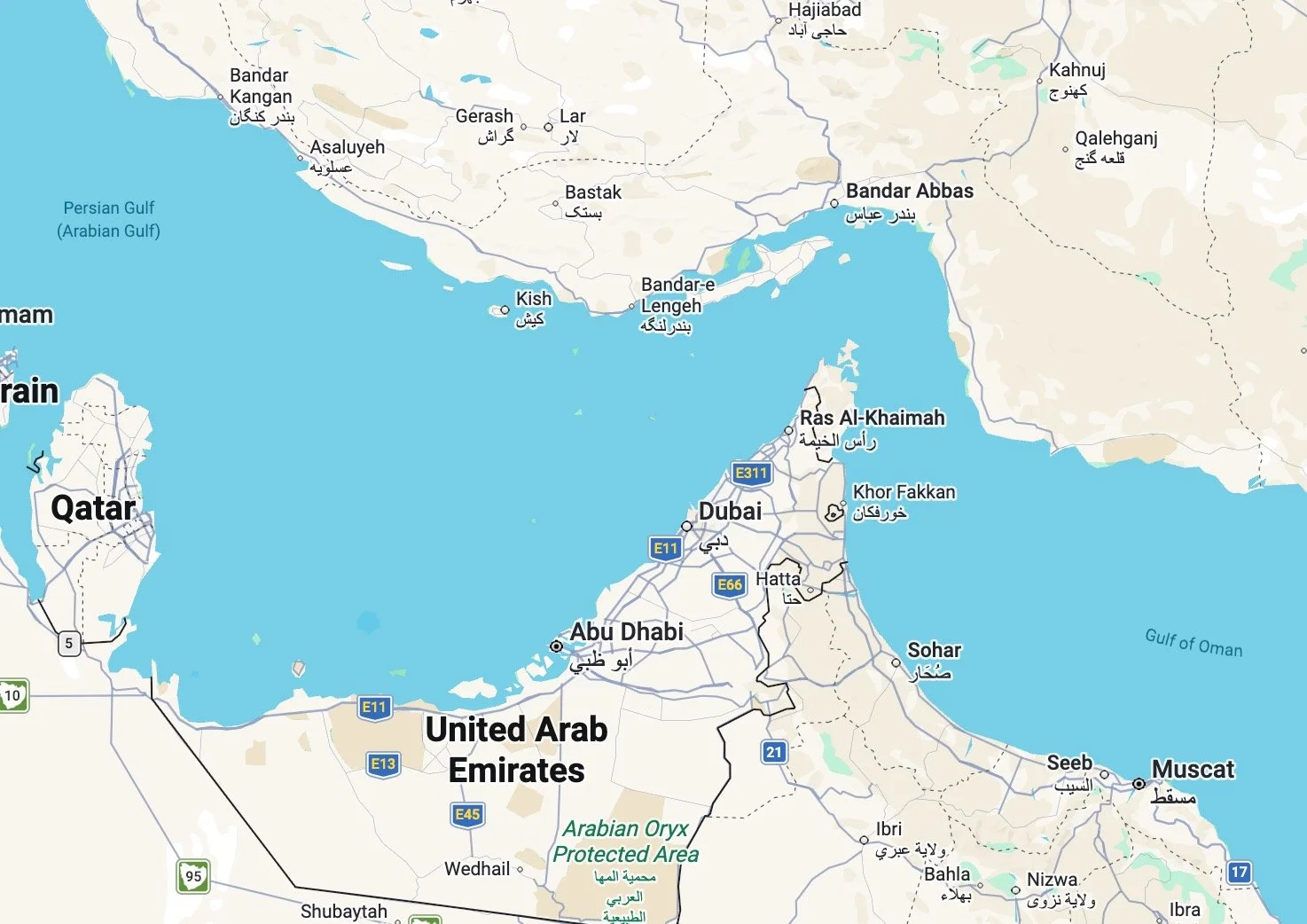
Image: Google Maps
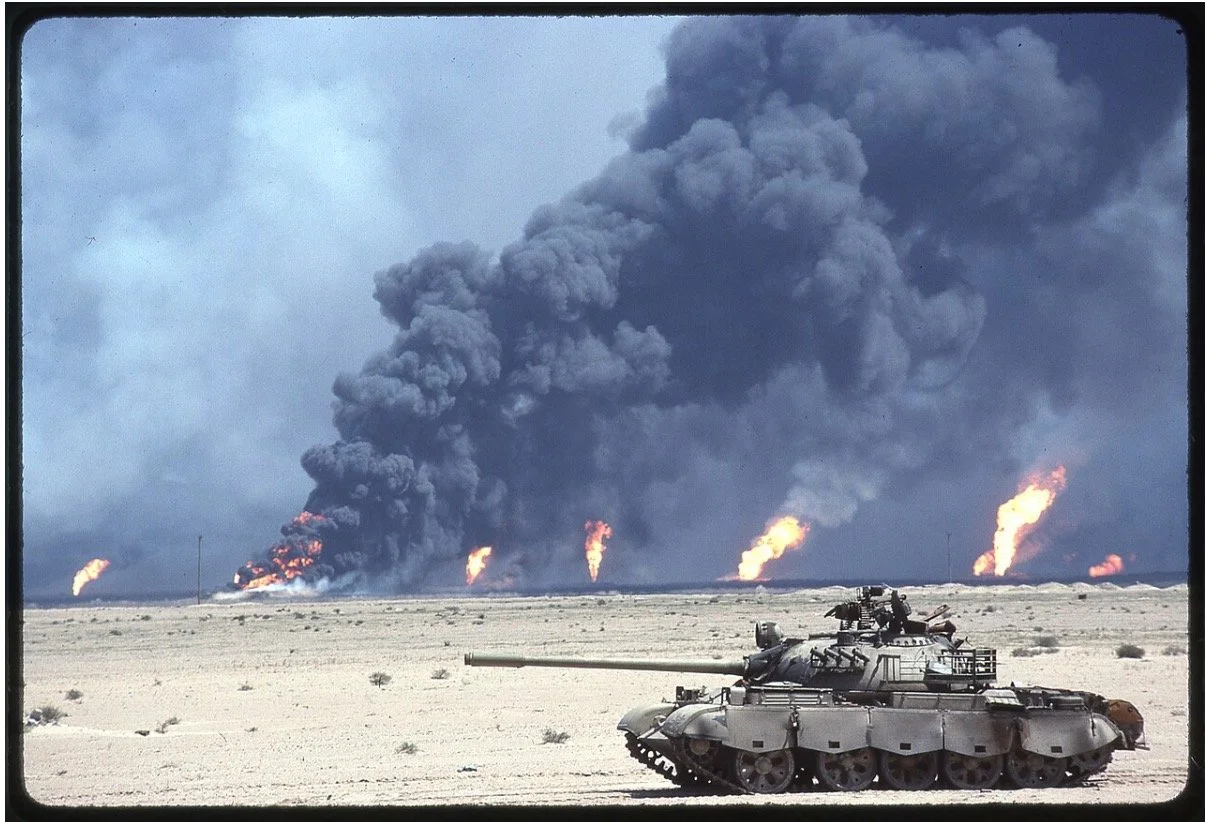
Oil producers like Kuwait have already maxed out their storage capacity. This will shortly trigger the need to “shut-in” the wells. But you can’t turn off a well like a tap. Wells are highly pressurized beasts that don’t like being tampered with. Forcing a "shutting in" means fighting that pressure. When it goes wrong that leads to blowouts. In the words of an oil man, a blow-out is like a knife being punched into a super-pressurized truck tyre. That can trigger well fires. We should remember that when Saddam Hussein’s army was driven out of Kuwait in 1991, the retreating Iraqis set on fire over 600 wells simultaneously. It took nearly a year and a large international effort to bring it all back under control.
The US and Israel won’t stop unless forced to.
The US and Israel have launched four attacks on Iran in the past year. This one is different and Iran understands that. Professor Seyed Mohammad Marandi, a former advisor to Iran’s nuclear negotiating team, said recently:
“Iran does not want the global economy to suffer. But this is an existential threat, a war for survival. The war will be devastating, no doubt. Sitting here in Tehran I recognize that but it is not Iran that wants to carry out aggression. It is Trump and Netanyahu, and, of course, the collective West, which supports all acts of oppression, including genocide in Gaza.
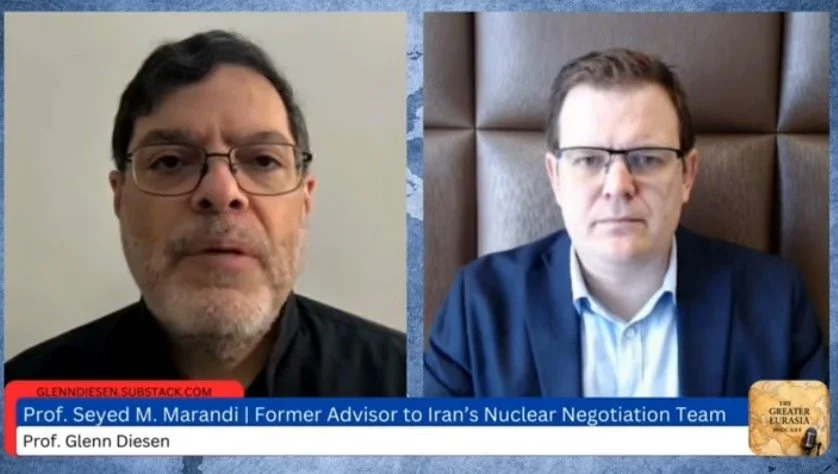
“So what Iran can do and will do is that it – and its allies – will hit as hard as possible. It will bring down the global economy,” Mirandi said.
I have heard Professor Mirandi warn of this several times over the past couple of years. The question is: has Iran the intact capacity to make good on the threat? I covered the depth of their military potential in an article A US-Israeli attack on Iran could crash the UK, German, NZ and Australian economies a fortnight before the attack. More recently, military analysts I follow are adamant that the proposed US escort of tanker convoys through the Strait of Hormuz will face a blizzard of drones and short-range missiles dotted across a thousand well-hidden sites in the adjoining hills. As US Colonel Daniel Davis (ret) said of Trump this week: “He’ll put our ships right in the barrel of a gun. This is just madness. This is lunacy. It just can't work.”
David Wearing from the University of Sussex, an expert in Britain and the Gulf states describes the Strait of Hormuz as the “jugular vein of Global Capitalism.”
“Oil is still the lifeblood of the world economy, unfortunately, and gas is a significant energy source as well. Global capitalism doesn't function without this stuff for long,” he told Michael Wilson of Novara Media.
“Qatar is trying to raise the alarm. They’re saying: this is a major emergency – and trying to put pressure on actors in the global system, including the Europeans, to galvanize alarm so that that pressure can then come on the Americans to stop this. It's not alarmist. It's really serious.”
The West is steering the world onto the rocks
The frighteningly low calibre of Western leadership is steering us all towards the rocks. A mature vassal would have the courage to warn the emperor that his actions were counterproductive. The cowering, cringing cowardice of “leaders” like the UK’s Keir Starmer, Australia’s Anthony Albanese, New Zealand’s Christopher Luxon, or the all-but incoherent Emmanuel Macron, or for that matter Canada’s momentarily-courageous Mark Carney, are setting their own economies up for a tremendous shock. A more strategic network of satellite states would impose pressure on the imperial centre to avoid foolish moves that roil the international system.
“It's hard to sugar the pill because it's genuinely quite scary,” says Ed Conway, Energy Editor at Sky New UK. Conway is conservative, respected and not given to hyperbole, yet he says if you asked economists, energy experts or or people in geopolitics to compose a list of the scariest kind of scenarios that could happen with the global economy, “the closure of the Strait of Hormuz would always be up there in the top five. And now it's happening.”
Eugene Doyle
Eugene Doyle is a writer based in Wellington, New Zealand. He has written extensively on the Middle East, as well as peace and security issues in the Asia Pacific region.
This article may be reproduced without permission but with suitable attribution.